
How to Store Your Social Security Card Safely
Learn the safest ways to store your Social Security card and protect your identity from theft or loss. Discover where to keep it, what to avoid, secure backup strategies, and the common mistakes that increase fraud risk.
Dr. Emily Harrison - Social Security Process Research Specialist
2/5/202619 min read
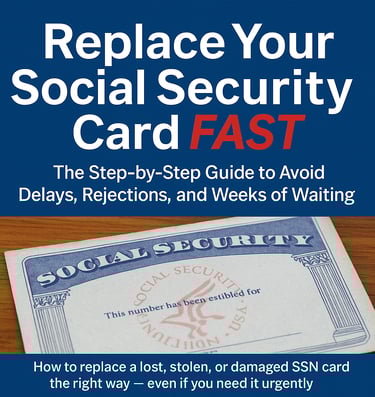
How to Store Your Social Security Card Safely: The Complete, No-Mistakes Guide to Protecting Your Identity for Life
Your Social Security card is one of the most powerful—and dangerous—documents you will ever own.
Not because it looks important. Not because it’s flashy. But because that nine-digit number is the master key to your identity, your finances, your credit, your benefits, and your future.
Lose control of it, and you can lose years of your life cleaning up the damage.
This is not exaggeration. This is reality.
Every year, millions of Americans become victims of identity theft, benefit fraud, tax fraud, and credit abuse—not because they were careless online, but because their Social Security number was exposed once, often years earlier, through improper storage.
This article is not a quick checklist.
It is not surface-level advice.
It is not “put it in a drawer and forget it.”
This is a deep, authoritative, real-world guide to storing your Social Security card safely at every stage of life—at home, during moves, while traveling, after replacement, and in emergency scenarios—so you never have to panic, replace it, or fight fraud again.
If you take this seriously and implement what you read here, you dramatically reduce the risk of one of the most devastating forms of personal loss in modern America.
Let’s begin.
STOP wasting weeks in bureaucratic limbo! Get the exact blueprint to replace your SSN card NOW for just $9.99. Don't risk another rejection—Claim your instant access before this offer expires!
https://replacessncard.com/replace-your-social-security-card-fast-guide
Why Your Social Security Card Is More Dangerous Than Your Passport
Most people think passports are more sensitive than Social Security cards.
They are wrong.
A passport proves who you are.
A Social Security number lets someone become you.
With just your SSN—and sometimes your name and date of birth—criminals can:
Open credit cards and loans in your name
File fake tax returns and steal refunds
Access or redirect Social Security benefits
Pass employment background checks
Obtain medical services under your identity
Destroy your credit before you even notice
Your passport expires.
Your Social Security number does not.
That’s why the way you store your Social Security card matters more than almost any other document you own.
The Most Common (and Dangerous) Mistakes People Make
Before we talk about how to store your card safely, you need to understand what not to do—because these mistakes are shockingly common.
Keeping It in Your Wallet
This is the single most dangerous habit.
If your wallet is stolen, lost, or copied—even once—your SSN may be compromised forever.
Wallets are lost in:
Restaurants
Airports
Ride-shares
Hotels
Gyms
Beaches
Bars
Public restrooms
No amount of “I’ll be careful” makes this safe.
Rule: Your Social Security card should never live in your wallet.
Leaving It Loose in a Drawer
Many people believe a drawer equals safety.
It does not.
Documents stored loosely in drawers are:
Easy to misplace
Easy to throw away accidentally
Easy to access by visitors, contractors, roommates, or children
In shared households, this becomes even riskier.
Storing It with Everyday Papers
Mixing your Social Security card with mail, bills, tax drafts, or school paperwork increases the chance of:
Accidental disposal
Scanning or copying
Unauthorized viewing
Sensitive documents must be isolated, not blended.
Taking Photos of It on Your Phone
This feels convenient—and it is extremely dangerous.
Phones are:
Hacked
Backed up to the cloud
Lost
Repaired by third parties
A single cloud breach can expose your SSN permanently.
If you must store a digital copy (and we will address when that is appropriate), it must be done correctly—with encryption and access controls.
The Golden Rule of Social Security Card Storage
Before we go further, internalize this:
Your Social Security card should be stored like a rare, irreplaceable asset—not like a document you’ll “need sometimes.”
In reality, you almost never need the physical card.
You need it:
When starting a new job (sometimes)
When applying for certain benefits
When replacing the card itself
That’s it.
Because usage is rare, storage should prioritize maximum security, not convenience.
The Safest Place to Store Your Social Security Card at Home
Option 1: A Fireproof, Waterproof Home Safe (Best Overall Choice)
A high-quality home safe is the gold standard.
Not a cheap lockbox.
Not a thin metal case.
A fire-rated, waterproof safe.
Why?
Because it protects against:
Theft
Fire
Flood
Accidental disposal
Unauthorized access
What to Look for in a Safe
Fire rating: At least 30–60 minutes
Water resistance: Flood-sealed or waterproof
Lock type: Digital keypad or biometric + backup key
Mounting: Bolt-down option to prevent removal
Your Social Security card should be placed inside:
A sealed document sleeve
Inside the safe
Away from frequent access
This alone eliminates most risks.
Option 2: A Bank Safe Deposit Box (Maximum Physical Security)
If you want near-zero theft risk, a bank safe deposit box is extremely effective.
Pros:
Bank-level security
No home theft risk
Controlled access
Cons:
Limited access hours
Not ideal if you suddenly need the card
Annual fee
This option is ideal if:
You rarely need the card
You already use a safe deposit box
You want maximum peace of mind
Many high-net-worth individuals and retirees choose this method.
Option 3: A Locked, Concealed Document Safe (Acceptable but Inferior)
If you cannot use a fireproof safe or bank box, a locked document container is better than nothing.
However:
It offers limited fire protection
It is vulnerable to theft
It relies heavily on concealment
This should be considered a temporary solution, not a permanent one.
How to Store Your Social Security Card Correctly Inside the Safe
Storing it in a safe is not enough.
How you store it inside matters.
STOP wasting weeks in bureaucratic limbo! Get the exact blueprint to replace your SSN card NOW for just $9.99. Don't risk another rejection—Claim your instant access before this offer expires!
https://replacessncard.com/replace-your-social-security-card-fast-guide
Step-by-Step Best Practice
Use a protective sleeve
Acid-free
Moisture-resistant
Non-transparent
Store it flat
Do not fold
Do not laminate (lamination can invalidate the card)
Separate from other IDs
Do not store with passport or birth certificate unless necessary
Minimize handling
Label discreetly
Avoid obvious labels like “SSN”
Use neutral labeling if organizing documents
This minimizes both physical damage and accidental exposure.
Should You Store a Digital Copy?
This is where many people go wrong.
The Truth About Digital Copies
A digital copy can be useful only if done correctly.
Most people do it incorrectly.
When a Digital Copy Makes Sense
You travel frequently
You manage paperwork remotely
You want a backup in case of loss
You are replacing a lost card
When It Is Dangerous
Stored in phone photos
Stored in email
Stored in unencrypted cloud storage
Stored on shared devices
The Only Acceptable Way to Store a Digital Copy
If you choose to store a digital version:
Use end-to-end encrypted storage
Use two-factor authentication
Use strong, unique passwords
Avoid naming files obviously (e.g., “SSN.jpg”)
Examples of safer options:
Encrypted password managers with secure file storage
Encrypted external drives stored in a safe
Never store it casually.
Never share it.
Never email it to yourself.
Why You Should Never Carry Your Social Security Card
Let’s be explicit.
There is no legitimate reason to carry your Social Security card daily.
Employers do not require it once employment is established.
Police do not ask for it.
Hospitals do not need the physical card.
If someone tells you to carry it “just in case,” they are wrong.
The risk outweighs the benefit every single time.
Special Situations: How Storage Rules Change
Moving to a New Home
Moves are one of the highest-risk moments for document loss.
Best practice:
Remove your Social Security card from drawers or safes
Personally transport it
Do not pack it in moving boxes
Store it immediately upon arrival
Never let movers handle it.
Traveling or Living Abroad
If you are traveling internationally:
Leave the physical card at home or in a safe deposit box
Carry only a secure digital reference if absolutely necessary
If you live abroad:
Store the card in a bank safe deposit box
Keep a secure digital backup
After a Replacement Card Is Issued
This is critical.
Many people replace their card… then treat the new one casually.
After replacement:
Store the new card securely immediately
Destroy any old copies or notes
Review where your SSN may have been exposed
A replacement does not undo prior exposure.
Storage discipline matters more than ever.
What to Do If You Think Your Social Security Card Was Exposed
Storage is prevention—but awareness is defense.
If you suspect exposure:
Monitor credit reports
Consider a credit freeze
Watch for IRS or SSA notices
Act quickly
The faster you respond, the less damage occurs.
Why Proper Storage Is an Emotional Investment, Not Just a Practical One
People underestimate the emotional toll of identity theft.
Victims report:
Years of stress
Endless phone calls
Legal disputes
Lost opportunities
Anxiety about finances
Fear of opening mail
All because of one mistake with one document.
Proper storage is not paranoia.
It is self-respect and future protection.
The Hidden Reason People End Up Replacing Their Social Security Card
Most replacements are not due to disasters.
They happen because:
The card was misplaced
Stored carelessly
Thrown away accidentally
Lost during moves
Stolen with a wallet
All of these are storage failures.
Fix storage once—and you likely never need replacement again.
Your Next Step: Go From “Careful” to Bulletproof
If you have read this far, you understand something most people never do:
Your Social Security card deserves a system—not a hiding place.
But knowing what to do is not the same as doing it fast, correctly, and without mistakes—especially if your card is already lost, damaged, or exposed.
That’s why we created a step-by-step, no-confusion solution.
🔐 Take Action Now: Replace and Secure Your Social Security Card the Right Way
If your card is:
Lost
Damaged
Stolen
Exposed
Or improperly stored in the past
You need to act now, not later.
👉 Get the “Replace Your Social Security Card FAST” Guide
This complete, plain-English guide shows you:
Exactly how to replace your card quickly
What documents to use
How to avoid delays and rejections
How to secure your new card correctly from day one
How to reduce future identity risk
Do not guess.
Do not wait.
Do not make a costly mistake.
Protect your identity once—and never worry about it again.
continue
…again.
Once your Social Security card is properly stored, the goal is not merely “keeping it safe,” but eliminating every realistic scenario in which it could ever be lost, seen, copied, damaged, or accessed without your explicit intent. That is the standard you should be aiming for—not “better than before,” but structurally secure for life.
To get there, we need to go deeper.
Because storage is not just a location.
It is a system.
The Psychology Behind Unsafe Storage (And Why Smart People Still Get This Wrong)
One of the most misunderstood aspects of Social Security card storage is that intelligence has nothing to do with safety.
Highly educated, financially successful, detail-oriented people lose or expose their Social Security cards every single day.
Why?
Because the human brain is terrible at assessing low-frequency, high-impact risks.
You don’t need your Social Security card often.
Nothing bad happens most of the time.
So the brain minimizes the danger.
Until the day it doesn’t.
This is why people:
“Just leave it in the drawer”
“Put it somewhere I’ll remember”
“Keep it with important papers”
“Take a quick photo for later”
All of these feel reasonable.
All of them are mistakes.
Safe storage must override instinct.
It must be deliberate, boring, and inconvenient—because inconvenience is what prevents catastrophe.
Why Lamination Is a Serious Mistake (And Can Invalidate the Card)
Many people laminate their Social Security card thinking they are “protecting” it.
This is a dangerous myth.
The Social Security Administration explicitly states that laminating your card is not recommended, and in some cases, laminated cards can be rejected.
Why?
Lamination can obscure security features
It alters the physical document
It can interfere with verification processes
It can make replacement more difficult
Protection does not mean modification.
If you want to protect the card:
Use a removable protective sleeve
Keep it flat
Store it in a controlled environment
Never laminate.
Never punch holes.
Never write on it.
Never alter it in any way.
STOP wasting weeks in bureaucratic limbo! Get the exact blueprint to replace your SSN card NOW for just $9.99. Don't risk another rejection—Claim your instant access before this offer expires!
https://replacessncard.com/replace-your-social-security-card-fast-guide
Environmental Threats Most People Never Consider
Even if your card is hidden and locked, environmental factors can destroy it silently over time.
Humidity
Excess moisture can:
Warp the paper
Cause ink fading
Encourage mold growth
This is especially common in:
Basements
Bathrooms
Coastal climates
Heat
High temperatures can:
Damage paper fibers
Fade text
Degrade protective sleeves
Fire
House fires destroy paper in minutes.
Without a fire-rated safe, your card may not survive.
Flooding
Even a small leak can:
Ruin documents
Smear ink
Make cards illegible
This is why fireproof and waterproof protection is not optional if you are serious about long-term safety.
Storage Rules for Families With Children
Children dramatically increase risk.
Not intentionally—but through curiosity, movement, and chaos.
In households with children:
Drawers get opened
Papers get shuffled
Items get moved “to help”
Things get thrown away accidentally
If you have children in your home:
Never store your Social Security card in accessible furniture
Never label it clearly
Never rely on “they won’t touch it”
Children don’t need to understand the importance to cause damage.
Use a locked, secured solution—always.
Storage Rules for Shared Living Situations
Roommates.
Extended family.
Caregivers.
House cleaners.
Maintenance workers.
Shared access increases exposure.
Even if you trust everyone:
Accidental access still counts as exposure
Curiosity still happens
Mistakes still happen
Best practice:
Use a personal safe
Keep it hidden
Control access exclusively
Trust is not a security strategy.
How Often Should You Access Your Social Security Card?
The answer surprises people.
Almost never.
For most adults, legitimate use cases occur:
Once every several years
Or less
If you find yourself accessing it frequently, something is wrong with your system.
Common reasons people access it unnecessarily:
Employers requesting it improperly
Financial institutions asking for “verification”
Medical offices requesting documentation
Schools asking for records
In most cases:
The number is sufficient
The physical card is not required
Before retrieving the card, always ask:
“Is the physical Social Security card required, or is the number sufficient?”
Often, the answer is the latter.
The One-Time Access Principle
Here is a powerful rule that dramatically reduces risk:
Every time you remove your Social Security card from storage, you increase risk.
Therefore:
Access should be rare
Purpose-driven
Planned
Immediately followed by re-storage
Never leave it “out for later.”
Never set it down casually.
Never stack it with other documents.
Retrieve → Use → Secure → Done.
What About Storing It With a Birth Certificate or Passport?
This is a nuanced issue.
Many people store all “important documents” together.
This can be acceptable only if:
The storage is highly secure
The container is fireproof and waterproof
Access is tightly controlled
However, understand the risk trade-off:
If that container is compromised, everything is exposed
A single failure becomes catastrophic
Advanced best practice:
Separate high-value documents into different layers
Reduce single points of failure
This is not paranoia.
This is risk management.
Storage After Identity Theft or Fraud
If you have ever experienced:
Identity theft
Fraudulent credit activity
Tax fraud
Benefit misuse
Then storage rules become even stricter.
Your Social Security number is already at risk.
Improper storage compounds the damage.
In these cases:
Physical storage must be maximum security
Digital exposure must be minimized
Access must be logged mentally and intentionally
You cannot undo past exposure—but you can prevent future amplification.
The Silent Danger of “Temporary Storage”
One of the most dangerous phrases in document security is:
“I’ll put it here for now.”
Temporary storage becomes permanent.
Permanent storage becomes forgotten.
Forgotten storage becomes loss.
Examples:
Leaving it on a desk
Putting it in a bag “just for today”
Keeping it with paperwork during filing
Setting it aside during a move
There is no such thing as safe temporary storage for a Social Security card.
If it’s out, it’s at risk.
How Long Should a Social Security Card Last?
Properly stored, a Social Security card can last decades.
Paper degradation is slow when:
Temperature is stable
Humidity is controlled
Light exposure is minimal
Handling is rare
Most card replacements are not due to age.
They are due to storage failure.
This means that if you store it correctly today, you may never need to replace it again in your lifetime.
The Cost of Replacing a Social Security Card (Beyond the Paper)
Replacing a card is not just an administrative task.
It costs:
Time
Stress
Identity exposure
Documentation effort
Opportunity cost
People often underestimate:
Appointment delays
Rejected applications
Documentation mismatches
Mail risks
Avoiding replacement is always preferable.
And the best way to avoid replacement is correct storage.
Storage Is Part of Identity Hygiene
Just like:
Using strong passwords
Freezing credit
Monitoring accounts
Safe storage of your Social Security card is part of identity hygiene.
Neglect one area, and the entire system weakens.
You wouldn’t leave your front door unlocked because “nothing bad usually happens.”
Treat your Social Security card the same way.
The Moment Most People Realize Storage Matters
For many people, the realization comes too late.
It comes when:
Credit is destroyed
Benefits are delayed
Taxes are rejected
Loans are denied
Stress becomes overwhelming
At that point, storage advice feels cruelly obvious.
The goal of this guide is to make that realization now, while prevention is still possible.
If Your Card Is Already Lost, Damaged, or Improperly Stored
Here is the hard truth:
If your Social Security card has ever been:
Carried daily
Stored in a wallet
Left in a drawer
Photographed casually
Packed during a move
Accessible to others
Then you should assume risk.
Not panic.
But action.
Because hope is not a strategy.
This Is Where Most People Freeze (And What You Should Do Instead)
At this point, many people think:
“I’ll deal with it later”
“It’s probably fine”
“I don’t know where to start”
This is exactly how small risks become permanent problems.
You don’t need to figure it out alone.
You don’t need to guess.
You don’t need to make it harder than it is.
Final Step: Lock This Down the Right Way—Once
If you want absolute clarity and speed—especially if your card is already compromised, missing, or improperly handled—the smartest move is to follow a proven, step-by-step system.
🚀 Get the “Replace Your Social Security Card FAST” Guide
This is not generic advice.
It is a practical, action-driven roadmap that shows you:
Exactly when you should replace your card (and when you shouldn’t)
How to replace it quickly without delays
What documents actually work
How to avoid common rejection traps
How to store your new card safely from day one
How to reduce identity risk going forward
No confusion.
No wasted time.
No costly mistakes.
👉 Get instant access to the “Replace Your Social Security Card FAST” Guide and take control of your identity today.
Your future self will thank you for acting before something goes wrong.
continue
—because prevention only works if it becomes permanent behavior, not a one-time fix.
What follows now is where most articles stop—but where real protection actually begins.
We are going to move from where to store your Social Security card, to how to design your life so the card is never at risk again, even years from now, even during chaos, even during emergencies.
This is the level that separates people who “try to be careful” from people who never deal with this problem again.
The “Single Point of Failure” Problem (And How Storage Solves It)
A single point of failure is any situation where one mistake causes irreversible damage.
For Social Security cards, common single points of failure include:
Carrying it in your wallet
Keeping it with frequently accessed documents
Storing it where others can access it
Relying on memory instead of structure
Using convenience instead of security
Your goal is to eliminate single points of failure entirely.
That means:
Multiple layers of protection
Clear rules
Zero improvisation
Safe storage is not about trust.
It’s about design.
Designing a “No-Decision” Storage System
The most dangerous moments are when you have to decide what to do.
Decision-making under stress leads to shortcuts.
A no-decision system means:
You never wonder where the card goes
You never choose where to put it
You never improvise
The system decides for you.
The No-Decision Rule
Your Social Security card has exactly one home.
Not two.
Not “usually.”
Not “unless.”
One.
If it is not actively being used for a specific, legitimate reason, it is in that location.
Always.
This removes human error entirely.
The “Access Ritual” (Yes, This Matters)
People underestimate how rituals create safety.
Every time you access your Social Security card, you should follow the same ritual:
Retrieve it intentionally
Use it only for the specific task
Do not place it down casually
Complete the task
Return it immediately
Confirm it is secure
This sounds obsessive.
It is not.
Pilots use checklists.
Surgeons use checklists.
Because humans forget.
A ritual is how professionals prevent disaster.
Why “I’ll Put It Back Later” Is a Lie
There is no “later.”
Later turns into:
Dinner
Sleep
A phone call
A distraction
A move
A lost document
Every major loss story includes the phrase:
“I was going to put it back.”
The moment the task is complete, the card goes back.
Not after.
Not soon.
Not when convenient.
Immediately.
Storage During Life Transitions (The Highest-Risk Periods)
Most Social Security card losses happen during transitions, not normal life.
Moving
Moving is catastrophic for document security.
During a move:
Routines break
Objects are displaced
Boxes get mixed
Stress is high
Rule:
Your Social Security card never goes into a moving box. Ever.
You transport it personally.
You store it last.
You unpack it first.
Divorce or Separation
Emotional stress creates chaos.
Documents get:
Split
Packed
Thrown away
Taken accidentally
If you are separating:
Secure your Social Security card immediately
Store it independently
Do not assume the other person will handle it correctly
Death in the Family
When someone dies, documents move fast—and mistakes happen.
People handling estates often:
Grab papers
Copy documents
Store things temporarily
Your Social Security card should not be involved in this process.
Secure it separately before anything else.
Natural Disasters
Floods.
Fires.
Storms.
These destroy documents instantly.
If you live in a disaster-prone area:
Fireproof and waterproof storage is non-negotiable
Off-site backup (bank safe deposit box) becomes more valuable
Disasters don’t announce themselves.
What Not to Do After You’ve “Fixed” Storage
One of the most dangerous moments is after people feel safe again.
They relax.
They bend rules.
They make exceptions.
Examples:
“I’ll just keep it out today”
“I’ll put it with these papers temporarily”
“I’ll take a photo just in case”
Every exception creates a crack.
Cracks grow.
The rule is simple:
No exceptions.
Why Most Identity Theft Starts Years Before It’s Discovered
This is critical to understand.
Most identity theft is not immediate.
It begins when:
A document is exposed
A number is copied
A photo is leaked
A card is mishandled
Then nothing happens.
For years.
Then suddenly:
A loan appears
Credit tanks
Benefits disappear
Taxes are rejected
People think the crime just happened.
It didn’t.
It happened years ago.
Proper storage today protects you from a future you cannot see.
Storage and Aging: Planning for the Long Term
As people age, storage must evolve.
Memory fades.
Mobility changes.
Caregivers enter the picture.
If you are planning ahead:
Document where your Social Security card is stored
Ensure trusted individuals know that it exists, not where it is
Use legal tools (like powers of attorney) instead of physical access
Never give caregivers casual access to your card.
Access should be legal—not physical.
What About Storing Copies for Emergencies?
This is where people get confused.
Copies increase risk.
If you create copies:
They must be controlled
They must be encrypted
They must be intentional
If you don’t need a copy, don’t create one.
Most emergencies do not require the physical card.
They require:
The number
Verification through institutions
Less duplication equals less exposure.
The Myth of “It Won’t Happen to Me”
This belief is the common denominator in nearly every identity theft case.
Victims include:
Doctors
Lawyers
Accountants
Government employees
Financial professionals
Education does not protect against complacency.
Systems do.
Why Replacing the Card Is Sometimes the Smartest Move
If your card has been:
Lost
Carried daily
Photographed
Stored carelessly
Exposed to others
Replacing it may be the cleanest reset.
A replacement card allows you to:
Re-establish secure storage
Correct past mistakes
Lock down behavior going forward
Replacement is not failure.
It’s risk management.
The Cost of Doing Nothing
Doing nothing feels safe because it’s familiar.
But doing nothing means:
Living with unknown exposure
Accepting silent risk
Hoping for the best
Hope is not a plan.
And with something as powerful as your Social Security number, hope is expensive.
The Moment to Act Is Before the Problem Exists
Most people act after damage.
Smart people act before.
If you:
Fix storage now
Replace the card if needed
Lock down your system
You drastically reduce the chance of ever dealing with:
Fraud
Credit damage
Lost benefits
Endless bureaucracy
This is one of the highest ROI actions you can take in your personal life.
The One Question That Changes Everything
Ask yourself honestly:
“If my Social Security card disappeared today, would I know exactly where it went wrong?”
If the answer is no, your system is not complete.
And incomplete systems fail eventually.
This Is Not About Fear—It’s About Control
Fear is reactive.
Control is proactive.
Safe storage is about:
Ownership
Awareness
Structure
Permanence
Once it’s done right, you stop thinking about it.
That’s the goal.
Final Call to Action: Secure Your Identity the Right Way—Now
If you are even slightly unsure about:
Where your card is
How it’s stored
Who has accessed it
Whether it’s been exposed
Do not delay.
👉 Get the “Replace Your Social Security Card FAST” Guide
This guide exists for one reason:
To help you take decisive action without confusion, delays, or mistakes.
Inside, you’ll learn:
When replacement is necessary
How to replace your card quickly
Which documents work
How to avoid rejection
How to store your new card safely from day one
How to build a permanent, no-risk system
You only need to do this once.
Do it right.
Do it now.
And never worry about this again.
continue
—because the real danger is not the one you see coming, but the one that waits quietly while life moves on.
At this stage, most readers feel the importance of safe storage—but feeling is not enough. What actually protects you for the next 10, 20, or 40 years is behavioral permanence. The goal is to make unsafe handling of your Social Security card so unlikely that it effectively never happens.
That requires one final layer: future-proofing.
Future-Proofing Your Social Security Card Storage
Future-proofing means your system remains secure even when:
You forget details
Your life changes
Stress is high
Other people get involved
Time passes
Most storage systems fail because they assume the future will look like today.
It won’t.
The Three Questions of Future-Proof Storage
Every truly safe system answers these questions clearly:
Where is the card stored right now?
Who can access it under any circumstances?
What happens if something unexpected occurs?
If you cannot answer all three instantly, your system is incomplete.
Documenting the Existence (Not the Location)
Here is a subtle but powerful strategy used by security professionals:
You document the existence of the Social Security card—without documenting its location.
Why?
Because someday:
You may forget
Someone may need to help you
Legal processes may require awareness of the document
But documenting the location creates risk.
Best practice:
Note in a personal records list that you possess a Social Security card
Indicate that it is “stored securely”
Do not specify where
This allows continuity without exposure.
What Trusted People Should (and Should Not) Know
Many people think, “My spouse should know where everything is.”
This is emotionally understandable—but strategically risky.
Instead:
One trusted person should know that the card exists
They should know how to access it legally if required
They should not have casual access
Legal access is safer than physical access.
This is where estate planning tools matter more than drawers and safes.
The Danger of Over-Explaining Storage
The more people who know:
Where it is
How to access it
How it’s stored
The higher the risk.
Security improves with less disclosure, not more.
This is counterintuitive—but proven.
How Storage Fails Over Time (Without You Noticing)
Most failures are not dramatic.
They are slow.
They happen because:
You move it “temporarily”
You reorganize
You forget a rule
Someone helps “clean up”
You break the ritual once
And once is enough.
That’s why rigid systems outperform flexible ones.
The “Never Again” Standard
The real standard is not “safe enough.”
The standard is:
“I will never need to think about this again.”
If your system requires memory, judgment, or ongoing effort, it will fail eventually.
A correct system runs automatically.
When You Should Reevaluate Storage (And When You Shouldn’t)
Constantly reevaluating creates risk.
However, there are specific moments when reevaluation is necessary:
After a move
After a replacement card is issued
After identity theft or exposure
After a major life change
Outside of those events, do not touch the system.
Stability is safety.
Why Most Advice Online Is Incomplete
Most articles stop at:
“Use a safe”
“Don’t carry it”
“Be careful”
That advice is not wrong—but it is shallow.
What they don’t address:
Human error
Long-term behavior
Transitions
Stress
Forgetfulness
System decay
That’s why people who “knew better” still get burned.
The Difference Between Careful People and Protected People
Careful people:
Try to remember
Try to be cautious
Try to avoid mistakes
Protected people:
Don’t rely on memory
Don’t improvise
Don’t need to be careful
They rely on structure.
Structure outlasts motivation.
One Last Reality Check
Ask yourself this—not emotionally, but factually:
Has your Social Security card ever been in your wallet?
Has it ever been photographed?
Has it ever been stored loosely?
Has it ever been accessible to others?
If the answer to any of these is yes, then the risk already exists.
The only question is whether you neutralize it—or live with it.
Neutralizing Risk Is a One-Time Effort
This is the good news.
You do not need to think about this forever.
You do not need ongoing work.
You do not need anxiety.
You need:
One correct decision
One correct action
One permanent system
Then you move on.
Why Speed Matters More Than Perfection
People delay because they want to “do it right.”
But delay is itself a risk.
The fastest correct action is better than the slowest perfect one.
If your card is not stored correctly right now, the priority is action—not optimization.
The Cleanest Path Forward (Especially If You’re Unsure)
If there is any doubt at all:
About exposure
About handling
About past mistakes
About storage quality
The cleanest path is replacement followed by correct storage.
This resets the system psychologically and practically.
The Decision That Protects the Next 20 Years
You will make thousands of decisions this year.
Most won’t matter.
This one does.
Because the cost of getting it wrong is enormous—and the cost of getting it right is small.
Take Control Now—Before You’re Forced To
If you want clarity instead of guessing…
If you want speed instead of frustration…
If you want certainty instead of hope…
👉 Get the “Replace Your Social Security Card FAST” Guide
This guide exists for one reason:
To help you lock this down permanently, without confusion, without delay, and without costly errors.
Inside, you’ll find:
A clear decision framework
Exact replacement steps
Document checklists that work
Storage systems that last
Behavior rules that eliminate future risk
You don’t need to think about this again.
Do it once.
Do it right.
And move on with confidence—knowing that your identity is protected even when life gets messy, stressful, unpredictable, or overwhelming, because your system does not rely on memory, motivation, or luck—it relies on structure, and structure holds even when everything else slips, shifts, or breaks, ensuring that your Social Security card remains exactly where it should be, exactly when it should be there, for as long as you need it, without exception, without hesitation, and without ever giving you a reason to panic, scramble, or wonder what might have happened if you had just acted sooner and taken control before the risk became real and unavoidable and impossible to undo because at that point the damage is already done and all you can do is react instead of prevent, which is precisely why acting now—decisively, intentionally, and correctly—is the only move that truly makes sense…
https://replacessncard.com/replace-your-social-security-card-fast-guide
Help
Questions? Reach out anytime.
infoebookusa@aol.com
© 2026. All rights reserved.