How to Replace Your Social Security Card After an Immigration Status Change
Learn how to replace your Social Security card after an immigration status change. Discover which SSA documents are required, how DHS verification works, processing timelines, and the common mistakes that delay approval.
Dr. Daniel Giants - Compliance & Documentation Analyst
1/26/202624 min read
When your immigration status changes in the United States, it feels like you’ve finally crossed a finish line. Maybe you just received your green card. Maybe your asylum was approved. Maybe you adjusted from a student visa to a work visa, or from a temporary work permit to permanent residency. On paper, your future just became more secure.
But then reality hits.
You go to start a new job.
You try to update payroll.
You apply for a loan.
You change your name.
You file taxes.
And suddenly, someone asks for your Social Security card.
Not just the number.
The actual physical card.
And the card you have is wrong.
It might still say “VALID FOR WORK ONLY WITH DHS AUTHORIZATION.”
It might be tied to an old name.
It might be tied to an expired status.
It might not even exist anymore.
That moment creates panic, confusion, and fear — especially for immigrants who have already fought through years of paperwork, interviews, and uncertainty just to get here.
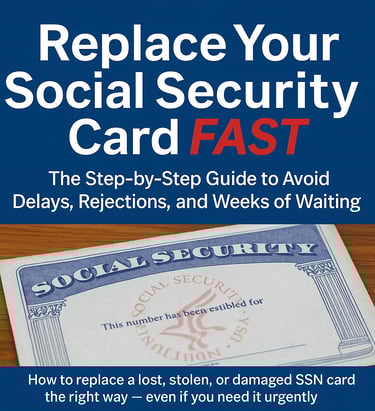
STOP wasting weeks in bureaucratic limbo! Get the exact blueprint to replace your SSN card NOW for just $9.99. Don't risk another rejection—Claim your instant access before this offer expires!
https://replacessncard.com/replace-your-social-security-card-fast-guide
This guide exists to make one thing absolutely clear:
You are legally entitled to a corrected Social Security card after your immigration status changes — but only if you follow the exact process the Social Security Administration requires.
Most people get denied, delayed, or stuck in months-long loops not because they are ineligible — but because they submit the wrong documents, file at the wrong time, or trust outdated advice.
In this deep-dive guide, you will learn:
• Exactly when you must replace your Social Security card after a status change
• How SSA verifies your immigration records behind the scenes
• Which status changes trigger a mandatory card update
• How to remove work restrictions from your card
• How to avoid SAVE system mismatches
• How to get approved the first time
• What to do if you were already denied
• How to speed up the process when a job, benefits, or taxes are on the line
This is not a generic overview.
This is the same playbook immigration attorneys, HR departments, and SSA insiders use to get cards issued correctly and fast.
Let’s start with the most dangerous misunderstanding immigrants have.
Why Your Old Social Security Card Becomes Legally Wrong After a Status Change
Most immigrants think their Social Security number is what matters.
And yes — the number never changes.
But the card does.
Your Social Security card is not just proof of your number.
It is proof of your work authorization category and identity record in the federal system.
When your immigration status changes, three government databases must match:
• USCIS (your immigration status)
• DHS SAVE system (employment and benefit eligibility)
• Social Security Administration (SSA Numident record)
If even one of those is out of sync, your card becomes legally incorrect.
Here are the most common status changes that require a new Social Security card:
• From F-1 student to OPT
• From OPT to H-1B
• From H-1B to green card
• From asylum pending to asylum approved
• From TPS to permanent resident
• From DACA to green card
• From conditional resident to permanent resident
• After receiving work authorization (EAD)
• After receiving a green card
• After changing your legal name
If any of these happened to you and you are still using your old Social Security card, you are technically presenting incorrect work eligibility documentation — even though your SSN number is valid.
That is why employers, payroll systems, banks, and government agencies suddenly start rejecting your information.
The card is outdated.
And SSA will not automatically fix it.
You must request a replacement.
The Three Types of Social Security Cards Immigrants Get
Before you can replace your card correctly, you need to understand what kind of card you are upgrading from — and what you are entitled to receive.
There are three types of Social Security cards issued to non-citizens:
Restricted card
“VALID FOR WORK ONLY WITH DHS AUTHORIZATION”
This is what most people get when they are on a temporary visa, OPT, or EAD.Non-work card
“NOT VALID FOR EMPLOYMENT”
This is issued when you are in the U.S. without work authorization but need an SSN for taxes or benefits.Unrestricted card
No restrictions printed.
This is what U.S. citizens and permanent residents receive.
If you now have a green card, asylum approval, or permanent work authorization, you are legally entitled to an unrestricted Social Security card.
STOP wasting weeks in bureaucratic limbo! Get the exact blueprint to replace your SSN card NOW for just $9.99. Don't risk another rejection—Claim your instant access before this offer expires!
https://replacessncard.com/replace-your-social-security-card-fast-guide
Keeping a restricted card after becoming a permanent resident causes:
• I-9 verification problems
• Payroll rejections
• E-Verify mismatches
• Benefit delays
• Bank and credit application failures
And yes — employers do look at the text printed on the card.
How SSA Knows Your Immigration Status Changed (And Why They Often Don’t)
Most immigrants assume that when USCIS approves a green card, SSA is automatically notified.
That is only half true.
USCIS sends data to DHS SAVE.
SSA checks SAVE when you apply for a card.
But SSA does not continuously monitor status changes.
If you don’t file a replacement request, SSA may still think you are a student, temporary worker, or EAD holder even years later.
That is why people walk into SSA with a green card and get told:
“We can’t verify your status.”
It isn’t because your status is wrong.
It’s because SSA has not pulled your updated SAVE record yet.
That is why the way you apply matters.
The Wrong Way to Apply (That Causes Most Denials)
This is where most immigrants lose months.
They either:
• Mail in the wrong documents
• Apply online when they should not
• Show up too early after approval
• Use an expired I-94
• Submit a receipt notice instead of an approval
• Give SSA documents SAVE cannot verify
And then SSA sends a letter:
“We cannot process your application at this time.”
That letter can delay you 30, 60, or even 120 days.
Meanwhile your job is waiting.
Your payroll is frozen.
Your benefits are on hold.
The Right Way to Replace Your Card After a Status Change
The correct process has four phases:
Wait until your status is fully active in SAVE
Gather the correct documents
Submit the application the right way
Monitor verification until approval
Let’s go step by step.
Phase 1 — When You Are Allowed to Apply
This is the biggest mistake people make.
You cannot apply for a new Social Security card the same day you receive your green card or EAD approval.
USCIS must push your data into SAVE first.
That usually takes:
• 7–10 days for EAD
• 10–14 days for green cards
• 2–3 weeks for asylum approval
• 3–4 weeks for some status adjustments
If you apply too early, SSA will not be able to verify you, and your application will be suspended.
This is called a SAVE mismatch.
You do not want that.
The safest window to apply is:
10–14 days after USCIS approval notice OR green card issue date
If you already applied and got denied, we’ll cover how to fix that later.
Phase 2 — Documents You Must Bring
To replace your card after a status change, SSA requires proof of:
• Identity
• Legal immigration status
• Work authorization (if applicable)
Here is what actually works.
If you now have a green card:
Bring:
• Your green card (I-551)
• Your current passport (recommended)
• Your old Social Security card (if you have it)
If you have asylum approval:
Bring:
• Form I-94 showing asylum granted
• Approval notice (I-797)
• Passport (if available)
If you have a new EAD:
Bring:
• EAD card
• I-94
• Passport
If you changed your name:
Bring:
• Court order or marriage certificate
• All above documents
Never bring only a receipt notice.
Never bring screenshots.
Never bring copies.
SSA must see originals or DHS-issued cards.
Phase 3 — The Application Form
You will complete Form SS-5.
On the form:
• Check “Replacement”
• Indicate name change if applicable
• Use your current legal name
• Use the same SSN as before
Do NOT apply for a new number.
Your number stays the same.
Phase 4 — SSA Verification Process
When you submit your documents, SSA will check SAVE.
Three things can happen:
Instant verification → Card processed
Secondary verification → 3–10 business days
Manual review → 2–4 weeks
Most delays happen in step 2.
If SAVE cannot instantly confirm, SSA sends a verification request to DHS.
This is normal.
The key is that your documents must match exactly what USCIS has on file.
Name mismatches, old I-94s, and early applications cause failures here.
What Happens After Approval
Once SSA verifies your status, they update your Numident record and issue your new card.
Timeline:
• Processing: 3–10 days
• Card mailed: 5–14 days
Most people receive their card within 2–3 weeks.
If You Were Already Denied
If SSA already told you they “could not verify your status,” do not reapply blindly.
You must first confirm that SAVE is updated.
Here’s how:
• Go to a Social Security office
• Ask them to check SAVE manually
• Provide your USCIS receipt number
• Ask if your status shows correctly
If SAVE is still pending, wait 7–10 days and try again.
If SAVE is correct, ask SSA to resubmit verification.
This is where most immigrants get stuck because SSA employees often don’t explain this.
Why Employers Care About the Text on Your Card
Many immigrants think:
“My SSN is the same, so it doesn’t matter.”
It does.
Your employer must complete Form I-9.
If your card says “VALID FOR WORK ONLY WITH DHS AUTHORIZATION,” they must also see your EAD or visa.
If your card is unrestricted, they do not.
HR departments often refuse to accept restricted cards after you become a green card holder.
Payroll systems flag mismatches.
This is why replacing your card is not optional — it is part of becoming fully work authorized in the U.S.
What If Your Name Changed With Your Status?
If you changed your name when you got married, divorced, or naturalized, you must update SSA or your taxes, credit, and benefits will be wrong.
SSA uses your name as the primary identity key.
A mismatch can cause:
• IRS rejections
• W-2 errors
• Benefit delays
• Bank freezes
Name updates are done on the same SS-5 form when you replace your card.
Special Situations That Cause Delays
These are the traps that cause months of waiting:
• Applying before SAVE is updated
• Using an expired I-94
• USCIS errors in your record
• Hyphenated or accented names
• Mismatched birthdates
• Status still showing “pending”
If any of these apply to you, you must fix USCIS before SSA can issue a card.
SSA does not correct immigration data.
They only read it.
How Long Can You Work While Waiting?
If you already have work authorization, you can continue working while your card is being replaced.
Your employer can verify you through:
• E-Verify
• USCIS documents
• SSA verification
But many HR departments still demand the card.
This is why getting it fast matters.
How to Speed It Up When Time Is Critical
If you are starting a job, applying for a loan, or filing taxes, you cannot afford delays.
This is where most people fail because they follow the basic SSA instructions instead of using the accelerated path.
There is a way to reduce processing time dramatically — but only if you submit the right combination of documents, timing, and follow-up.
And that is exactly what the “Replace Your Social Security Card FAST Guide” gives you.
It is not just instructions.
It is the exact step-by-step system used by immigration attorneys and HR compliance teams to:
• Avoid SAVE mismatches
• Force manual verification
• Correct USCIS errors
• Bypass unnecessary delays
• Get cards issued in the shortest possible time
If your status changed, your card must change too.
And every day you wait is another day your identity, income, and benefits are stuck in limbo.
Get the Replace Your Social Security Card FAST Guide now and follow the proven system to get your correct, unrestricted, legally valid Social Security card without delays, denials, or wasted weeks.
Because in America, your future is not just about having a number.
It’s about having the right card attached to it.
continue
attached to it — and that card is what unlocks your ability to work, get paid, get credit, receive benefits, and move forward with your life in the United States after your immigration status changes.
Now let’s go deeper into the mechanics that almost nobody explains: what actually happens inside the federal systems when you try to replace your Social Security card after a status change — and why so many perfectly eligible immigrants get stuck in endless loops.
The Hidden Systems That Control Your Social Security Card
When you submit your SS-5 application, SSA is not “deciding” if you qualify.
They are checking three databases:
• Numident — SSA’s master record of your identity
• SAVE — DHS’s verification system
• USCIS ELIS — where your immigration status lives
If even one of these is out of sync, your case freezes.
Here’s how it works in real life.
You walk into SSA with a green card.
The clerk enters your A-Number.
SSA sends a query to SAVE.
SAVE tries to confirm your lawful permanent resident status.
If SAVE returns:
“Class of admission: F-1” or “H-1B” or “Pending” — even though you have a green card — SSA cannot issue an unrestricted card.
This is called a Class of Admission Mismatch.
STOP wasting weeks in bureaucratic limbo! Get the exact blueprint to replace your SSN card NOW for just $9.99. Don't risk another rejection—Claim your instant access before this offer expires!
https://replacessncard.com/replace-your-social-security-card-fast-guide
It happens when USCIS has not fully updated the backend systems that feed SAVE.
This is why applying too early is deadly.
Why Waiting 10–14 Days After Approval Is Critical
USCIS approval does not mean SAVE is ready.
Approval means your case was decided.
SAVE only updates when USCIS pushes the data downstream.
That push can take days or weeks.
If you apply during that window, SSA sees the old status and locks your file.
Once locked, even if SAVE updates later, your application may not automatically resume.
It sits in limbo.
You then wait for a letter.
Then another.
Then another visit.
The FAST Guide teaches you how to avoid that trap completely.
What Happens If SSA Sends Your Case to “Manual Verification”
This is where horror stories are born.
Manual verification means SSA sends DHS a form asking them to confirm your status.
DHS has 20 federal working days to respond.
But that clock resets if:
• Your name doesn’t match
• Your date of birth is off by one digit
• Your I-94 number changed
• Your status was recently adjusted
• Your A-Number was reused
Some people wait 60–120 days.
During that time:
• You can’t get paid
• You can’t update payroll
• You can’t fix tax records
• You can’t get benefits
This is why you want instant SAVE verification — not manual.
How to Maximize Your Chance of Instant Approval
These are the exact factors SSA uses for instant verification:
• Your SAVE record shows current status
• Your name matches USCIS exactly
• Your date of birth matches exactly
• Your A-Number matches
• Your I-94 matches
• Your passport matches
• Your card matches
If even one field is different, SAVE downgrades you to manual verification.
This is why people with accents, hyphenated names, or married names get hit hardest.
What If USCIS Has Your Name Wrong?
This happens more than you think.
USCIS may have:
• Dropped a middle name
• Merged two last names
• Misspelled your first name
• Used your passport spelling instead of legal
SSA will use USCIS spelling, not your preference.
If your green card or EAD shows a different spelling than your USCIS profile, SAVE may reject you.
The FAST Guide shows how to check and correct this before applying.
Can You Apply Online?
Sometimes.
You can only apply online if:
• You are a U.S. citizen or permanent resident
• Your status is already verified
• You are not changing your name
• You are not removing a restriction
Most immigrants changing status do not qualify.
If you apply online and you are not eligible, your application stalls.
In-person is safer and faster for status changes.
What If You Lost Your Old Social Security Card?
It does not matter.
SSA can issue a replacement based on your identity.
But bringing your old card helps prevent Numident mismatches.
If SSA cannot find your old record, they may create a duplicate — which causes IRS and credit disasters.
The FAST Guide teaches how to prevent that.
What If Your Employer Is Pressuring You?
Employers are legally allowed to ask for I-9 documentation, but they cannot require a specific document.
However, payroll systems often require SSA verification.
If your employer says “We need your new Social Security card,” you are on a deadline.
This is when you must:
• Get SAVE verified
• File correctly
• Follow up aggressively
Passive waiting does not work.
What If You Changed Status From Undocumented to Legal?
This is one of the most sensitive situations.
If you previously had no SSN or had a restricted one, SSA must link your new lawful status to your record.
Mistakes here can create:
• Two SSNs
• IRS errors
• Benefit rejections
• Credit file splits
This must be handled carefully.
The FAST Guide shows how to merge records safely.
What If Your Status Is Temporary but Renewable?
If you are on TPS, asylum, or DACA, your card may still be restricted.
That is normal.
But the expiration date of your work authorization must match SSA records.
When you renew your EAD, you may need another replacement card.
If you don’t, SAVE mismatches will occur later.
The Emotional Reality Immigrants Face
Let’s be honest.
For immigrants, government paperwork is not just paperwork.
It represents safety, survival, and dignity.
When SSA tells you:
“We can’t verify you,”
It feels like your entire life is being questioned.
You did everything right.
You waited.
You paid fees.
You followed the law.
And still, you are stuck.
That’s why having the right system matters.
This is not about luck.
It’s about knowing how the machine works.
And once you know that, you can make it work for you.
Why the Replace Your Social Security Card FAST Guide Exists
Because millions of immigrants every year face:
• Lost jobs
• Delayed paychecks
• Rejected tax returns
• Frozen bank accounts
• Denied benefits
All because of a piece of paper that could have been fixed in days instead of months.
The FAST Guide is not theory.
It is a real-world, field-tested, step-by-step system to:
• Know exactly when to apply
• Bring the right documents
• Avoid SAVE traps
• Handle name changes
• Fix USCIS errors
• Get instant verification
• Force action when SSA stalls
If your immigration status changed, your Social Security card must change with it.
Do not let a silent database error hold your future hostage.
Get the Replace Your Social Security Card FAST Guide now and follow the proven path to getting your correct, unrestricted Social Security card — quickly, cleanly, and without the nightmare delays that trap so many people.
And once you have it in your hands, you will finally have the one thing every immigrant in America deserves:
Proof that your new life is officially recognized — in every system that matters.
continue
matters — not just on paper, but in the invisible digital infrastructure that decides whether you get paid, get approved, or get blocked.
Now we need to talk about something almost no immigrant is warned about: the cascading damage that happens when you do not update your Social Security card after a status change.
This damage doesn’t show up immediately.
It shows up months later — when it’s much harder to fix.
The Silent Chain Reaction You Trigger When You Keep the Wrong Card
When your immigration status changes but your Social Security record does not, five major systems drift out of alignment:
• SSA
• IRS
• USCIS
• Your employer’s payroll system
• Credit bureaus
They all use your SSN as the key — but they don’t all use the same version of your identity.
Here is what actually happens.
Your employer reports your wages to SSA using your SSN and name.
SSA compares that to Numident.
If Numident still shows you as a restricted worker, SSA flags the record.
That flag is shared with IRS.
Now IRS sees income coming from someone who supposedly cannot work.
That creates a compliance discrepancy.
Nothing happens immediately.
But later:
• Your tax return gets delayed
• Your refund gets frozen
• Your benefits are questioned
• Your credit file stops matching
This is why people who never replaced their card suddenly get IRS letters years later.
It started with one un-updated record.
Why Banks and Lenders Care About Your SSA Record
When you apply for a loan, mortgage, or even a bank account, financial institutions verify your SSN through SSA and credit bureaus.
If SSA says:
“Restricted work authorization”
But your credit file says:
“Permanent resident”
The system flags you as a risk.
Applications get rejected without explanation.
People think it’s their credit.
It’s not.
It’s their SSA record.
Why Health Insurance and Benefits Get Blocked
Medicaid, ACA, Social Security benefits, and even state programs use SSA verification.
If your SSA record still shows you as temporary or restricted, the system may deny you.
People with green cards get rejected for benefits they are legally entitled to — because SSA was never updated.
How Long Does This Damage Last?
Until you fix it.
Which means:
• Replacing the card
• Correcting Numident
• Re-syncing IRS
• Updating employers
• Repairing credit files
This can take months or years if not done right.
That is why the best time to fix it is immediately after your status change.
Not later.
Not when something breaks.
Right now.
What If You Already Worked With the Wrong Card?
This is common.
People get a green card, keep using their restricted card, and work for months or years.
You are not in trouble.
But your records are wrong.
Once you replace your card, SSA updates Numident and future wages align correctly.
The past mismatches usually resolve over time — unless there was a major IRS hold.
The FAST Guide explains how to clean this up if needed.
What If Your Employer Used E-Verify?
E-Verify also reads SSA and DHS.
If your card is outdated, E-Verify may flag you even though you are legal.
This is why people suddenly get “Tentative Nonconfirmations” after a status change.
The solution is not arguing with HR.
The solution is fixing SSA.
What If You Changed From Non-Work to Work Status?
If you originally had an SSN for taxes or benefits and now you are authorized to work, you must get a new card.
Otherwise, payroll will reject you.
The text “NOT VALID FOR EMPLOYMENT” on your card is fatal to HR systems.
This is a mandatory replacement.
What If You Became a U.S. Citizen?
If you naturalized, you should replace your card to remove restrictions and update citizenship.
This prevents issues with:
• Benefits
• Voting
• Government jobs
• Federal verification
Yes, even citizens can get blocked by an outdated SSA record.
The Psychological Cost of Bureaucratic Limbo
There is a hidden trauma immigrants experience when government systems don’t recognize their new status.
You feel invisible.
Unbelieved.
Unsafe.
Every phone call feels like a test.
Every form feels like a threat.
And the worst part?
Most of the time, nothing is actually wrong with you.
It’s just a database that wasn’t updated.
And no one tells you how to fix it.
Until now.
Why People Who Follow the FAST Guide Get Their Card Faster
Because they:
• Apply at the correct time
• Bring the exact documents SAVE needs
• Avoid mismatches
• Know how to force verification
• Know how to escalate when SSA stalls
• Know how to correct USCIS errors
• Know how to protect their Numident record
This is not about luck.
It is about controlling the process.
And when you control the process, you control the outcome.
Your immigration journey was not easy.
You earned your new status.
Do not let an outdated Social Security card erase that.
Get the Replace Your Social Security Card FAST Guide now and follow the exact system that turns your new legal status into a fully recognized, fully functional, fully accepted identity in every system that matters in the United States.
Because freedom in America is not just about crossing a border.
It’s about making sure every database knows who you really are.
continue
are — and that your future is not being silently sabotaged by a stale record buried in a federal server.
Now let’s get extremely practical and walk through real-life scenarios immigrants face after a status change — and exactly how the Social Security card replacement process plays out in each one.
These are not hypothetical.
These are the cases that flood SSA offices, HR departments, and immigration law firms every day.
Scenario 1 — F-1 Student → OPT → H-1B → Green Card
This is one of the most common paths.
Let’s follow Maria.
Maria came to the U.S. on an F-1 visa.
She got an SSN with the restriction:
“VALID FOR WORK ONLY WITH DHS AUTHORIZATION.”
She then got OPT.
Her EAD changed, but her SS card stayed restricted.
Then she got H-1B.
Again, she didn’t change her SS card.
Finally, she got her green card.
Legally, Maria is now a permanent resident.
But her SSA record still shows:
Class of Admission: F-1
And her card still shows a restriction.
When her employer switches payroll systems, the new system runs an SSA match.
It fails.
HR says:
“We need your updated Social Security card.”
Maria walks into SSA the day she receives her green card.
SAVE still shows H-1B.
SSA cannot verify permanent residency.
Maria gets sent to manual verification.
She waits 45 days.
Payroll is frozen.
This is avoidable.
If Maria had waited 10–14 days and applied with her green card when SAVE was ready, she would have been verified instantly.
This timing mistake costs people thousands of dollars.
Scenario 2 — Asylum Pending → Asylum Approved
Ahmed applied for asylum and received an EAD.
His SS card was restricted.
Two years later, asylum is approved.
He is now legally allowed to work without restriction.
But his SS card still says:
“VALID FOR WORK ONLY WITH DHS AUTHORIZATION.”
Ahmed starts a new job.
HR runs I-9 and E-Verify.
E-Verify flags a mismatch.
Ahmed is told he cannot start work.
He is legal — but his SSA record says otherwise.
The fix:
• Wait 10–14 days after asylum approval
• Apply for replacement SS card
• Get unrestricted card
• Re-run E-Verify
Without this, Ahmed stays blocked.
Scenario 3 — Marriage + Green Card + Name Change
This one destroys people.
Lina marries a U.S. citizen.
She changes her last name.
She gets a green card.
Her green card shows her married name.
But SSA still has her maiden name.
SAVE has one version.
Numident has another.
When she applies for a replacement card, SSA sees a mismatch.
Manual verification.
Weeks pass.
Her job offer expires.
The correct sequence should have been:
• Update name with USCIS
• Wait for SAVE
• Apply with matching documents
The FAST Guide teaches this exact order.
Scenario 4 — DACA → Green Card
People with DACA often had SSNs issued under temporary work authorization.
When they become permanent residents, they must upgrade their card.
If they don’t, SSA will continue reporting them as temporary.
This creates IRS and employer problems years later.
Scenario 5 — TPS → Work Authorization Renewal
Even if you do not become permanent, you must update SSA when your EAD changes.
If you don’t, SAVE will expire and SSA will reject verification later.
Why SSA Employees Often Give Wrong Advice
SSA clerks are trained to process citizens.
Immigration cases are a small fraction of their workload.
Many do not understand SAVE.
Many do not understand status categories.
They may tell you:
“Come back in 30 days”
or
“Your green card should be enough”
or
“We don’t do that here”
This is why immigrants need a playbook.
You must know what to ask for.
You must know what to say.
You must know how to escalate.
What to Say at the SSA Office
These phrases matter:
• “Please check my status in SAVE.”
• “My status was recently updated by USCIS.”
• “Can you initiate secondary verification?”
• “Can you resubmit my SAVE query?”
Most people don’t know these words.
They leave helpless.
You don’t have to.
How to Track Your Case
SSA gives you a receipt.
You can call your local office and ask:
“Has SAVE verification returned?”
If they say no, you know you are in DHS manual verification.
If they say yes, your card should be printing.
The FAST Guide shows how to push when it stalls.
Why Doing Nothing Is the Worst Choice
Some immigrants decide:
“I’ll just keep using my old card.”
That is how long-term damage happens.
You may not feel it today.
You will feel it when:
• You apply for a mortgage
• You file taxes
• You apply for benefits
• You change jobs
• You retire
This is not paperwork.
This is the backbone of your identity in America.
Your status changed.
Your card must change.
And the fastest, safest way to do it is to follow the proven system inside the Replace Your Social Security Card FAST Guide.
It takes what feels overwhelming and turns it into a clear, step-by-step path — so you can stop worrying and start living your new life in the U.S. with confidence, security, and full legal recognition.
continue
recognition — not just from immigration, but from every system that controls your money, your work, and your future.
Now let’s go even deeper into the most dangerous and least understood part of this process: what happens when your Social Security card replacement gets stuck — and how to force it to move.
Because for many immigrants, the real problem is not eligibility.
It’s inertia.
The Black Hole: When SSA Says “Pending”
If you applied correctly but your SAVE verification did not return instantly, your case enters a state called “Institute Secondary Verification.”
That sounds harmless.
It is not.
It means SSA sent DHS a digital request asking:
“Is this person really who they say they are, and are they authorized to work?”
DHS then checks:
• USCIS records
• I-94
• A-Number
• Biographic data
• Class of admission
And sends back a yes or no.
But DHS is not fast.
And SSA does not follow up automatically.
So files sit.
This is why people wait 30, 60, even 90 days.
What SSA Will Not Tell You
SSA will not proactively update you.
They will not call you.
They will not email you.
If you do nothing, nothing happens.
You must manage the case.
How to Force Movement
Here is the exact sequence used by professionals:
Day 0: Apply
Day 7–10: Call SSA and ask if SAVE returned
If no → Ask them to resubmit SAVE query
If yes → Ask for status update
If it has been 15+ business days:
Ask SSA to initiate third-level verification.
If it has been 30+ days:
Ask for a DHS status check escalation.
Most immigrants don’t know these exist.
They just wait.
What If SAVE Has the Wrong Status?
This is the nuclear problem.
If SAVE shows the wrong class of admission, SSA cannot fix it.
USCIS must.
You must file:
• USCIS correction request
• Or Infopass appointment
• Or service request
The FAST Guide shows which form and which channel to use.
Applying to SSA again without fixing SAVE will always fail.
Why Some People Get Two SSNs
This is rare — but catastrophic.
If SSA cannot find your old record and your documents look different, they may create a new Numident record.
That means two SSNs tied to you.
This destroys:
• Credit
• Taxes
• Benefits
• Employment
This happens most often when:
• Name changed
• Birthdate wrong
• Old card lost
• USCIS spelling different
The FAST Guide teaches how to prevent and fix this.
What If You Are Outside the U.S.?
If you changed status and then left the U.S., you must contact a U.S. embassy or SSA international office.
This is much slower.
If you are inside the U.S., always fix it before you travel.
Why Timing With Taxes Matters
If your SSA record is wrong when your employer submits your W-2, IRS may reject it.
That can:
• Delay refunds
• Trigger audits
• Block credits
Fixing SSA before January is critical.
Why People Think They’re “Denied” When They’re Not
SSA letters are confusing.
They often say:
“We cannot process your application at this time.”
That is not a denial.
That is a verification hold.
You are still eligible.
You just need to push the system.
The FAST Guide shows how.
How Long This Should Really Take
When done correctly:
• SAVE verification: instant to 3 days
• SSA processing: 1–3 days
• Card printing: 2–5 days
• Mail: 5–10 days
Total: 1–3 weeks.
When done wrong: 2–4 months.
That difference is knowledge.
And that is exactly what you get inside the Replace Your Social Security Card FAST Guide.
It turns a slow, silent, bureaucratic maze into a controlled, predictable process — so your immigration victory is not stolen by a database error.
You worked too hard for your new status to let that happen.
Get the guide.
Follow the system.
And get the right Social Security card — fast.
continue
fast — because your time, your income, and your peace of mind matter far more than the pace of a government server.
Now let’s address the last layer that almost no one talks about: what happens after you receive your new Social Security card — and how to make sure the correction actually propagates through the system.
Because getting the card is not the end.
It is the beginning of the cleanup.
What Changes When You Receive Your New Card
When SSA issues your new card, they update your Numident record.
That record is then used by:
• IRS
• Employers
• E-Verify
• Credit bureaus
• Banks
• State agencies
• Benefit programs
But those systems do not all update instantly.
Some pull data daily.
Some weekly.
Some only when triggered by a transaction.
This is why some people still see problems for weeks after getting their card.
Here is how to finish the job.
Step 1 — Update Your Employer
Give HR a copy of your new card.
Ask them to re-run:
• I-9 verification
• E-Verify (if applicable)
• Payroll SSA match
This forces the system to refresh.
Step 2 — Update the IRS
If you had a name or status change, submit Form W-4 to your employer.
This causes IRS records to align with SSA.
If you already filed taxes with the wrong name, you may need Form 1040-X.
The FAST Guide covers this.
Step 3 — Check Your Credit Reports
After 30–60 days, check:
• Experian
• Equifax
• TransUnion
Make sure your name and SSN match.
If they don’t, file a correction.
Step 4 — Update Banks and Benefits
Banks, Medicaid, Social Security benefits, and DMVs may all need your updated record.
Do not assume they auto-sync.
One mismatch can trigger holds.
Why This Matters More Than You Think
Immigrants often think:
“I got my green card. I’m done.”
But legally and financially, your SSA record is just as important.
It is the bridge between immigration and daily life.
Without fixing it, you live in a gray zone where:
• You are legal — but not recognized
• You are authorized — but not trusted
• You are approved — but not paid
That is not freedom.
That is limbo.
You did not survive years of applications, interviews, and uncertainty to live in limbo.
You deserve full recognition in every system that matters.
That is what the Replace Your Social Security Card FAST Guide gives you.
It is not just a how-to.
It is a protection against:
• Lost jobs
• Delayed pay
• Frozen accounts
• Tax disasters
• Benefit denials
• Credit damage
All caused by one outdated piece of plastic.
Get the guide now.
Follow the steps.
And turn your immigration victory into a fully functional American identity — with the right Social Security card to prove it.
continue
prove it — not just to yourself, but to every institution that touches your life in the United States.
Now, let’s address the final category of questions that immigrants ask when they are deep in this process, anxious, waiting, and afraid of making a mistake.
These are the questions that keep people awake at night.
“Am I going to get in trouble for having the wrong card?”
No.
Having an outdated or restricted Social Security card after your status changes is not a crime.
It is an administrative mismatch.
You are not being accused of fraud.
You are not “illegal.”
You are simply not synchronized.
The government expects you to fix it — not to be punished for it.
“Can my employer fire me while I wait?”
Legally, if you are work authorized, you can continue working.
But some employers refuse to proceed without a clean SSA match.
This is not always illegal — it is risk management.
The faster you fix SSA, the safer your job is.
“Will this affect my future citizenship?”
No — unless you let mismatches turn into compliance issues.
If IRS or SSA thinks you worked when you weren’t authorized, that can create problems later.
Fixing your SSA record prevents that narrative from ever forming.
“Can I travel while this is pending?”
Yes — but it is risky.
If SSA creates a duplicate record or mismatches while you are gone, fixing it from abroad is slow.
Always fix your SSA record before international travel if you can.
“What if SSA lost my documents?”
SSA should never keep originals longer than necessary.
But it happens.
Always bring copies.
The FAST Guide explains how to protect yourself.
“What if I was denied multiple times?”
That usually means SAVE or USCIS is wrong.
You must fix the upstream data.
Applying again will not help.
“How do I know if SAVE is correct?”
SSA can check it for you.
So can DHS.
The FAST Guide shows how.
This Is the Moment You Take Control
You already won the hardest battle.
You changed your immigration status.
You made it.
Do not let a technicality erase that victory.
Your Social Security card is the final gate.
It is the last key that unlocks the full system.
And once you have the right one in your hand, everything else gets easier.
Your job.
Your taxes.
Your credit.
Your benefits.
Your future.
Get the Replace Your Social Security Card FAST Guide now and follow the proven system that thousands of immigrants use to turn their new legal status into real, working, recognized American identity — fast, clean, and without unnecessary pain.
You deserve nothing less.
https://replacessncard.com/replace-your-social-security-card-fast-guide
Help
Questions? Reach out anytime.
infoebookusa@aol.com
© 2026. All rights reserved.