
How Often Do People Lose Their Social Security Card?
Millions of people lose their Social Security cards every year, often creating identity theft and verification risks. Learn why SSN cards are commonly lost, the consequences, and the best ways to protect and replace them safely.
Dr. Emily Harrison - Social Security Process Research Specialist
2/12/202620 min read
How Often Do People Lose Their Social Security Card?
If you think losing a Social Security card is rare, think again.
Every year, millions of Americans misplace, damage, or completely lose their Social Security card, often without realizing how common—or how disruptive—that loss really is. For many people, the card disappears quietly: tucked into an old wallet, misplaced during a move, ruined in a flood or fire, or stolen along with other personal documents. For others, the loss becomes painfully obvious at the worst possible moment—when starting a new job, applying for benefits, replacing a driver’s license, or handling an emergency financial or legal situation.
This article dives deeply into how often people lose their Social Security card, why it happens so frequently, what the real statistics show, and—most importantly—what it means for you when it happens. We will also explore behavioral patterns, life events, risk factors, and the psychological reasons people underestimate how vulnerable this document really is.
By the end of this guide, you’ll understand why losing your Social Security card is far more common than most people assume—and why being prepared matters more than ever.
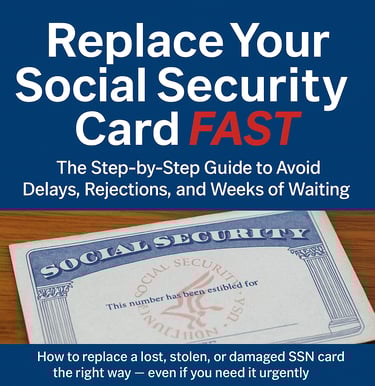
STOP wasting weeks in bureaucratic limbo! Get the exact blueprint to replace your SSN card NOW for just $9.99. Don't risk another rejection—Claim your instant access before this offer expires!
https://replacessncard.com/replace-your-social-security-card-fast-guide
The Social Security Card: A Small Document With Massive Importance
A Social Security card is deceptively simple.
It’s a small piece of paper. No photo. No barcode. No chip. No hologram. No expiration date.
And yet, it is one of the most powerful identity documents in the United States.
Your Social Security number (SSN) is used to:
Verify employment eligibility
Track earnings and benefits
Open financial accounts
Apply for loans and credit
Access government services
Confirm identity across institutions
Despite this importance, the physical card itself is not designed for durability, security, or daily use. It is printed on thin paper that fades, tears, and deteriorates easily—making it uniquely vulnerable to loss.
This mismatch between importance and fragility is one of the main reasons people lose it so often.
How Common Is It to Lose a Social Security Card?
Let’s address the core question directly.
How often do people lose their Social Security card?
While there is no single public database that tracks every lost card, data from replacement requests, government reports, and population behavior paints a clear picture:
Tens of millions of Americans have lost or replaced their Social Security card at least once in their lifetime.
According to estimates based on replacement card issuance by the Social Security Administration:
Over 15 million replacement Social Security cards are issued every year
The average adult American replaces their card 1–3 times over a lifetime
A significant portion of replacement requests are due to loss or misplacement, not name changes or errors
This means that losing a Social Security card is not an anomaly—it is a statistical norm.
Why the Real Numbers Are Likely Much Higher
The official replacement numbers only tell part of the story.
Here’s why the true frequency of lost Social Security cards is likely far higher than reported:
1. Many People Lose Their Card but Don’t Replace It
Millions of Americans lose their card and simply… don’t do anything.
They:
Memorize their SSN
Assume they’ll never need the physical card again
Delay replacement until years later
Forget entirely that the card is gone
These losses never appear in replacement statistics, yet the card is still lost.
2. Cards Are Lost Multiple Times by the Same Person
Replacement data counts cards, not people.
Some individuals lose their card repeatedly:
Once during college
Once during a move
Once after a divorce
Once after a disaster or theft
One person can account for multiple losses over time, inflating the real-life frequency of loss events.
3. Childhood Cards Are Often Lost Without Being Noticed
Many people lose their original Social Security card issued at birth without ever realizing it.
Parents store it “somewhere safe,” then:
Move homes
Change filing systems
Experience flooding or fire
Discard old documents accidentally
By adulthood, the original card is gone—but no one remembers when or how.
The Lifecycle of a Lost Social Security Card
To understand how often people lose their Social Security card, it helps to look at when it typically happens.
Loss is not random. It clusters around major life transitions.
Childhood and Early Adulthood
Most Social Security cards are issued shortly after birth. In childhood:
The card is usually stored by parents
Children rarely handle it directly
Loss often goes unnoticed
The first major risk spike happens during early adulthood, when people:
Leave home
Go to college
Move into dorms or shared apartments
Handle their own documents for the first time
During this period, cards are frequently:
Packed loosely during moves
Kept in backpacks or wallets
Left in unsafe or temporary storage
Career Transitions
Many people first realize their card is missing when:
Starting a new job
Completing an I-9 employment verification
Changing employers after years at the same company
This moment of realization is often accompanied by panic, because the need is immediate, not theoretical.
Major Life Events
Certain events dramatically increase the likelihood of losing important documents:
Marriage or divorce
Legal name changes
Immigration or citizenship processes
Buying or selling a home
Military service
Incarceration or hospitalization
During these transitions, documents are moved, copied, mailed, or temporarily stored—creating countless opportunities for loss.
Later Adulthood and Retirement
Ironically, many people lose their Social Security card again later in life when:
Downsizing homes
Clearing old files
Entering assisted living
Handling estate planning
At this stage, memory challenges and reduced document organization can make recovery even harder.
The Psychology Behind Losing a Social Security Card
One of the most overlooked aspects of this issue is human psychology.
People don’t treat their Social Security card like the critical identity asset it is.
Why?
“I Know the Number, So I Don’t Need the Card”
This is the most common belief—and the most dangerous.
Knowing your SSN does not replace the need for the physical card in many situations. Employers, government agencies, and financial institutions often require original documentation, not just memorized numbers.
This false sense of security leads people to:
Store the card carelessly
Forget where it is
Delay replacement after loss
“I’ll Deal With It Later”
Loss often feels non-urgent until it suddenly becomes urgent.
People postpone action because:
The replacement process seems complicated
They assume it will take weeks or months
They don’t need it “right now”
This delay increases stress when the card is suddenly required under time pressure.
“It Won’t Happen to Me Again”
After replacing a lost card, many people assume they’ve learned their lesson.
But without a system for secure storage, the same behaviors repeat—and the card is lost again.
STOP wasting weeks in bureaucratic limbo! Get the exact blueprint to replace your SSN card NOW for just $9.99. Don't risk another rejection—Claim your instant access before this offer expires!
https://replacessncard.com/replace-your-social-security-card-fast-guide
How Often Loss Happens Compared to Other Documents
To put this into perspective, consider how often people lose other critical documents:
Driver’s license: frequently replaced, but usually noticed immediately
Passport: lost less often due to perceived value and secure storage
Birth certificate: often lost during moves, but rarely carried
Social Security card: lost at a surprisingly high rate due to neglect and fragility
The Social Security card sits in a unique danger zone:
Too important to lose
Too boring to protect carefully
Too rarely used to stay top-of-mind
This combination makes it one of the most commonly misplaced identity documents in the United States.
Replacement Limits Reveal the Scale of the Problem
There is another critical data point that reveals how often people lose their Social Security card.
The Social Security Administration limits how many replacement cards you can receive:
3 replacement cards per year
10 replacement cards over a lifetime (with limited exceptions)
Why would such a limit exist?
Because loss is so common that without limits, the system would be overwhelmed.
These caps exist precisely because replacement requests are not rare—they are routine.
If losing a Social Security card were unusual, there would be no need for strict lifetime limits.
Loss vs. Theft: An Important Distinction
Not all missing cards are simply “lost.”
A significant percentage are:
Stolen during wallet theft
Taken during burglaries
Exposed during data breaches
Lost during disasters (fires, floods, hurricanes)
However, regardless of cause, the outcome is the same:
The card is gone
Your identity may be at risk
Replacement becomes urgent
Many people only realize their card is missing after identity fraud occurs—making loss not just inconvenient, but dangerous.
Why Losing Your Social Security Card Feels Worse Than Losing Other Documents
There is an emotional weight to losing a Social Security card that people don’t anticipate.
Common reactions include:
Panic
Shame
Fear of identity theft
Frustration with bureaucracy
Anxiety about delays and consequences
Unlike a credit card, you cannot cancel and replace your SSN.
Unlike a driver’s license, there is no local office that can issue a same-day replacement in many cases.
The loss feels permanent—even when it isn’t.
How Often Do People Lose It More Than Once?
This is the question almost no one asks—but should.
How often do people lose their Social Security card multiple times?
Based on replacement patterns:
A large percentage of replacement applicants are repeat replacers
Many people replace their card every 5–10 years
Life transitions repeatedly reintroduce risk
In other words, losing your Social Security card once does not mean you’re done with the problem forever.
Without intentional systems, loss becomes cyclical.
The Hidden Cost of Losing a Social Security Card
Even when replacement is possible, the cost is real:
Time off work
Delayed job start dates
Missed benefit applications
Postponed loans or housing
Emotional stress
Increased fraud risk
For some people, these costs compound into serious financial harm.
The Moment People Realize Just How Common This Is
Most people don’t realize how often Social Security cards are lost until:
They search online in a panic
They see forums filled with similar stories
They discover replacement limits
They learn how many others are dealing with the same issue
That moment often brings a mix of relief (“I’m not alone”) and urgency (“I need to fix this now”).
Why Being Proactive Matters
Losing your Social Security card is common.
Being unprepared for it is optional.
Understanding how often it happens—and why—gives you the power to:
Act quickly instead of panicking
Protect yourself from fraud
Avoid delays when documentation is required
Replace your card efficiently and correctly
And that brings us to the most important part of this entire discussion.
Don’t Wait Until the Worst Possible Moment
If you’ve lost your Social Security card—or even suspect you might have—you are not alone.
Millions of Americans are in the same position.
But the difference between stress and control is knowing exactly what to do next.
At the end of this guide, we’ll show you how to move forward fast, avoid common mistakes, and take back control of your identity.
Because when you need your Social Security card, you usually need it now—not weeks from now, not after endless confusion, and not after preventable delays.
And if you’re still reading, there’s a good chance this issue is closer to your life than you want to admit…
*…which is exactly why the next section matters more than you think, because it explains how ordinary, everyday situations quietly set people up to lose their Social Security card without realizing it until it’s too late, and how one overlooked habit can make the difference between a smooth replacement process and weeks of unnecessary stress when the card is suddenly required mid-sentence because the moment you realize it’s missing often coincides with a deadline that doesn’t care whether you’re ready or not and that’s when people discover that the system moves far slower than their situation demands and they wish they had taken action earlier because now every hour feels critical and every delay feels heavier than it should be and the anxiety builds as they wonder how something so small could cause such a large disruption in their life and they start searching for answers while time keeps moving forward and the pressure keeps rising and the realization hits that losing a Social Security card isn’t just common it’s a turning point that forces action whether you planned for it or not and that’s exactly why understanding the silent everyday scenarios that cause people to lose their card is essential because once you see them you’ll recognize how close you might already be to the same situation without even knowing it and that recognition alone can change how you handle this from this moment forward and prevent the next loss before it happens even though most people never see it coming until it’s already happened and that’s where we need to continue because the next part explains those scenarios in detail starting with the most overlooked one which is when people move homes and believe they packed everything safely but in reality the Social Security card is one of the first documents to disappear during a move because it’s small easy to misplace and rarely checked until someone suddenly needs it and realizes it’s not where it should be and the panic begins and the search starts and the questions pile up and the stress escalates as they replay every box every folder every drawer trying to remember the last time they saw it and the longer they search the more they realize how vulnerable they’ve been this whole time and that realization changes how they think about this document forever because once you lose it once you never forget how it feels but unfortunately many people don’t learn until they’re already in that situation which is why understanding these patterns ahead of time is so powerful and so necessary and why we’re going to break them down one by one starting now and continuing until you have absolute clarity on why this happens so often and what you can do differently before it happens again or before it happens to you for the first time and that’s where we continue next…
continue
…starting with the most overlooked one, which is moving homes, because this single life event accounts for an enormous percentage of lost Social Security cards, even among people who are otherwise careful, organized, and responsible, and the reason is not carelessness but false confidence, the belief that “everything important is packed safely,” when in reality the Social Security card is almost never packed with the same intentionality as passports, deeds, or financial statements, and that difference alone explains why it disappears so often during moves without anyone noticing until weeks, months, or even years later.
Why Moving Is the #1 Silent Cause of Lost Social Security Cards
When people move, they tend to divide their belongings into two mental categories:
Obviously critical items
Everything else
Passports, cash, jewelry, and electronics go into special bags. Furniture and clothes go into boxes. Documents fall into a dangerous middle ground.
The Social Security card is usually:
Stored loose in a drawer
Slipped into a random folder
Tucked inside a book or envelope
Kept in a wallet “temporarily”
Placed in a box labeled “papers”
During a move, that box gets:
Opened and closed repeatedly
Mixed with other papers
Set aside during unpacking
Forgotten entirely
And because the Social Security card is small, silent, and rarely used, no alarm goes off when it vanishes.
There is no immediate pain signal.
No notification.
No reminder.
Until suddenly there is.
STOP wasting weeks in bureaucratic limbo! Get the exact blueprint to replace your SSN card NOW for just $9.99. Don't risk another rejection—Claim your instant access before this offer expires!
https://replacessncard.com/replace-your-social-security-card-fast-guide
The Delayed Panic Effect
One of the most psychologically damaging aspects of losing a Social Security card is the delay between loss and discovery.
With a credit card, you know immediately.
With a phone, you know within minutes.
With a Social Security card, the timeline often looks like this:
Card is lost during a move
Weeks pass
Months pass
Years pass
A triggering event occurs
That triggering event might be:
A new job offer
A background check
A benefits application
A driver’s license renewal
A mortgage or loan application
And suddenly the card is required right now.
This is why people experience such intense panic. The loss didn’t just happen—it happened long ago, which means there is no clear memory of where to look.
Every possible location feels equally likely and equally hopeless.
The “I’ll Just Use My SSN” Trap
At this moment, many people make a dangerous assumption:
“I know my Social Security number. That should be enough.”
Sometimes it is.
Often, it is not.
Employers completing I-9 verification may require original documentation.
Government agencies may refuse photocopies.
Financial institutions may require physical proof.
And suddenly, memorization is useless.
The physical card matters again.
Why People Underestimate This Risk
People do not underestimate the importance of their Social Security number.
They underestimate the importance of the physical card.
This distinction matters.
The number feels abstract and permanent. The card feels optional.
This mental separation leads to behaviors like:
Leaving the card in a wallet for years
Tossing it into “temporary” storage
Assuming it’s safe because “it’s somewhere”
Delaying replacement because “I probably won’t need it”
These behaviors are incredibly common—and they directly explain how often people lose their Social Security card without realizing it.
College, Dorms, and Shared Living: A Perfect Storm
Another major loss cluster occurs during college and early adulthood, especially in shared living environments.
Think about the conditions:
Multiple roommates
Frequent moves
Limited private storage
Documents mixed with school papers
Parents no longer managing records
This is often the first time people personally handle their Social Security card.
They may need it to:
Start a part-time job
Complete financial aid paperwork
Verify identity
After that, it goes… somewhere.
And because young adults are focused on:
Classes
Jobs
Relationships
Social life
Document management is rarely a priority.
Loss during this stage is so common that many people don’t even realize it until their late 20s or early 30s.
Marriage, Divorce, and Name Changes: High-Risk Moments
Any process involving name changes dramatically increases the risk of losing a Social Security card.
Why?
Because it must be:
Removed from storage
Copied or mailed
Brought to offices
Placed with other paperwork
Every transfer increases risk.
During divorce, the risk increases further due to:
Emotional stress
Rushed decisions
Relocations
Discarded documents
People often clean aggressively during these periods, throwing away “old” paperwork without carefully checking every item.
Social Security cards are small enough to be thrown away accidentally without anyone noticing.
Natural Disasters and Emergency Loss
Another category of loss is sudden and traumatic.
Fires
Floods
Hurricanes
Tornadoes
In these situations, the Social Security card is rarely the first concern.
People focus on survival, shelter, and safety.
Documents are destroyed, soaked, or scattered.
Months later, when life begins to stabilize, the need for replacement becomes urgent—but emotional fatigue makes the process feel overwhelming.
This is another reason loss statistics underrepresent reality: many disaster-related losses are never formally reported until long after the event.
Theft and Burglary: Loss With Consequences
When a Social Security card is stolen, the stakes rise immediately.
Wallet theft is especially dangerous because:
The card is often carried “just in case”
Theft is discovered quickly
Identity risk becomes immediate
In these cases, people don’t just lose a card—they lose peace of mind.
They worry about:
Fraudulent accounts
Tax identity theft
Credit damage
Long-term consequences
This emotional weight often leads people to seek replacement quickly, which is why theft-related losses appear more frequently in official data compared to silent misplacement.
Why Older Adults Lose Their Social Security Card Again
Many people assume that document loss is a young person’s problem.
It is not.
Older adults lose their Social Security card at high rates due to:
Downsizing
Decluttering
Assisted living transitions
Memory challenges
Delegating paperwork to others
Ironically, retirement is when the Social Security card becomes relevant again, triggering discovery of a loss that may have happened decades earlier.
Replacement Limits Reveal Repeat Loss Patterns
Remember the replacement limits:
3 per year
10 per lifetime
These limits exist because repeat loss is common.
People don’t just lose their Social Security card once.
They lose it during:
Early adulthood
Midlife transitions
Later-life changes
Each phase introduces new risks.
Without intentional systems, the same mistake repeats.
The Emotional Spiral After Realizing the Card Is Lost
Once people realize their Social Security card is missing, a predictable emotional sequence follows:
Denial – “It has to be here somewhere.”
Search frenzy – Opening every drawer, box, folder.
Frustration – “How could I lose something so important?”
Anxiety – “What if someone finds it?”
Urgency – “I need this immediately.”
Confusion – “Where do I even start?”
This spiral is intensified by online searches that return:
Conflicting advice
Outdated information
Overwhelming instructions
People feel stuck, not because replacement is impossible, but because clarity is missing.
Why Timing Makes Everything Worse
Losing a Social Security card is inconvenient.
Needing it under deadline pressure is devastating.
This is why so many people describe the experience as one of the most stressful bureaucratic situations they’ve ever faced.
The system is not built for panic.
It is built for process.
When urgency meets bureaucracy, stress explodes.
The Core Truth People Don’t Want to Hear
Here is the uncomfortable truth:
Losing your Social Security card is not a rare accident.
It is a predictable outcome of how most people treat the document.
This is not about intelligence.
It is not about responsibility.
It is about habits.
And habits can be changed.
The Turning Point: From Reaction to Control
Most people deal with their Social Security card reactively.
They act after it’s lost.
The people who avoid repeated stress do one thing differently:
They prepare before the next time they need it.
Preparation does not mean paranoia.
It means understanding:
Why loss is common
When it happens
What to do immediately
How to replace it correctly and fast
That understanding is what transforms panic into control.
Why Speed Matters More Than You Think
When you need your Social Security card, delays can:
Cost you a job opportunity
Delay benefits
Stall financial transactions
Increase fraud risk
Speed is not about impatience.
It is about minimizing damage.
The faster you act, the fewer problems cascade.
The Most Dangerous Assumption of All
The most dangerous assumption people make is this:
“I’ll deal with it when I need it.”
That assumption is why so many people discover the loss at the worst possible time.
That assumption is why stress feels unavoidable.
And that assumption is completely optional.
What Comes Next Matters
Understanding how often people lose their Social Security card—and why—is only the beginning.
The next step is knowing exactly what to do when it happens, how to avoid mistakes that slow everything down, and how to move through the replacement process with confidence instead of confusion.
Because when this issue enters your life, it rarely arrives quietly.
It arrives with pressure.
Deadlines.
Consequences.
And that is why having a clear, fast path forward is not a luxury—it is a necessity.
And that is exactly what we’re going to cover next, starting with the most common mistakes people make immediately after realizing their Social Security card is missing, mistakes that cost them days or weeks they didn’t need to lose, mistakes that can be avoided entirely once you know what they are and why people make them in the first place, because the moment of realization is when most damage is done and understanding that moment is the key to handling everything that follows with precision, calm, and speed…
continue
…speed, and that moment of realization is where everything either stabilizes or spirals, because what people do in the first 24 to 72 hours after discovering their Social Security card is missing has an outsized impact on how stressful, slow, and risky the entire experience becomes, and unfortunately this is exactly when most people make the worst possible decisions, not because they are careless, but because they are acting under pressure without a clear mental model of how the system actually works.
The First Mistake: Panic-Driven Searching Instead of Strategic Action
The most common immediate response is frantic searching.
People tear through:
Every drawer
Every folder
Every box from the last move
Old wallets
Filing cabinets
Email attachments
Scanned PDFs
Hours disappear.
Sometimes days.
And while searching is understandable, it often becomes counterproductive once it crosses a certain threshold, because the card is usually not in any of the places people are checking now—it was lost long ago.
At this stage, the emotional need to “find it” overrides the rational need to replace it efficiently.
People tell themselves:
“I just need to look one more time.”
“It has to be somewhere.”
“Replacing it will be a nightmare.”
This delay costs time that could have been spent initiating replacement.
Why Endless Searching Feels Necessary (But Isn’t)
The reason people search so obsessively is psychological.
Finding the card feels like:
Restoring control
Avoiding bureaucracy
Avoiding judgment
Avoiding perceived failure
Replacement feels like:
Admitting loss
Entering a slow system
Exposing vulnerability
So people cling to the idea that the card is still “recoverable,” even when evidence suggests otherwise.
The problem is that the system does not care how long you searched.
Deadlines don’t pause.
Employers don’t wait indefinitely.
Applications don’t remain open forever.
At some point, searching becomes avoidance.
The Second Mistake: Assuming Replacement Is Automatic or Simple
Another extremely common misconception is that replacing a Social Security card is:
Instant
Fully online
Guaranteed
The same for everyone
None of those assumptions are reliably true.
Replacement eligibility depends on:
Citizenship or immigration status
Age
State of residence
Identity documents available
Whether limits have been reached
People often discover these constraints only after they start the process, which increases frustration and delays.
The Third Mistake: Waiting Until the Card Is Required
This is the most damaging mistake of all.
People wait to replace their Social Security card until someone demands it.
That someone might be:
A new employer
A government agency
A financial institution
A benefits office
At that point, the timeline is no longer yours.
You are reacting instead of planning.
This is why losing a Social Security card feels so catastrophic—not because replacement is impossible, but because the timing is wrong.
Why Employers Are Often the Trigger
A significant percentage of Social Security card losses are discovered during employment onboarding.
Here’s why this moment is so intense:
Job offers feel fragile
Start dates feel non-negotiable
Documentation requirements feel rigid
Even though alternative documents may sometimes be acceptable, many people are told—explicitly or implicitly—that the Social Security card is expected.
This creates fear of:
Appearing unprepared
Losing the opportunity
Delaying income
The emotional stakes are high, which amplifies stress.
The Fourth Mistake: Assuming a Photocopy Is Enough
Many people have a scanned copy or photo of their Social Security card.
This creates false reassurance.
In some situations, copies are acceptable.
In many critical situations, they are not.
Original documents are often required for:
Identity verification
Government processes
Certain employer checks
Relying on a copy can lead to rejection at the worst possible moment.
The Fifth Mistake: Not Considering Identity Risk
When a Social Security card is lost, people often focus only on replacement.
They overlook the identity theft risk.
This is especially dangerous if:
The card was stolen
The loss location is unknown
Other documents were lost at the same time
Failure to take protective steps can lead to:
Fraudulent accounts
Tax return fraud
Credit damage
Years of cleanup
Replacement without protection is incomplete action.
Why the System Feels Overwhelming (But Doesn’t Have to Be)
The Social Security system feels overwhelming because:
Information is fragmented
Advice online is inconsistent
People share horror stories
Rules vary by situation
Most people encounter the system only when stressed, which distorts perception.
In reality, the process follows predictable paths once you understand:
What applies to you
What documents you need
What order to act in
Clarity reduces fear.
The Hidden Time Cost of “Doing It Wrong”
When people make the mistakes above, they often experience:
Rejected applications
Missing documentation requests
Long processing delays
Multiple office visits
Restarted timelines
Each mistake compounds the delay.
What could have taken days turns into weeks.
What could have taken weeks turns into months.
This is why some people say, “Replacing my Social Security card was a nightmare,” while others say, “It was surprisingly straightforward.”
The difference is not luck.
It’s preparation.
Why People Lose the Card Again After Replacing It
Here is a brutal truth that explains the long-term statistics:
Many people who replace their Social Security card eventually lose it again.
Why?
Because replacement alone does not change behavior.
If the card goes back into:
A wallet
A random drawer
An unlabeled folder
A box of papers
The same risk cycle restarts.
This is why replacement limits exist.
The system assumes repeat loss.
The One Habit That Separates Repeat Loss From Long-Term Safety
People who stop losing their Social Security card do one thing differently:
They treat the card as a permanent identity asset, not a temporary document.
That means:
It has a dedicated storage location
That location does not change during moves
The card is not carried “just in case”
Access is intentional, not casual
This shift in mindset dramatically reduces loss.
Why This Matters Even If You’ve Never Lost It
Even if you believe your Social Security card is safe, this topic matters because:
Most losses are not anticipated
Most people overestimate their preparedness
Life transitions introduce new risks
Understanding how often people lose their Social Security card is not about fear.
It’s about realism.
The Cost of Inaction Is Invisible Until It Isn’t
The cost of not preparing is invisible—until the moment you need the card.
Then the cost becomes:
Immediate
Emotional
Financial
And unavoidable.
This is why proactive action feels unnecessary—until it feels urgent.
The Shift From “Common Problem” to “Personal Problem”
At first, losing a Social Security card sounds like a general statistic.
Something that happens to “other people.”
Then one day, it becomes your problem.
And when it does, everything you wish you had known suddenly matters.
Why Guides Exist in the First Place
People don’t search for help replacing a Social Security card because they’re curious.
They search because:
Time is running out
Pressure is mounting
Confusion is high
A good guide does not just explain rules.
It reduces stress.
It restores control.
It gives you a clear path forward.
The Critical Question You Should Ask Yourself Right Now
Not “Have I lost my Social Security card?”
But:
“If I needed it urgently next week, would I be ready?”
Most people, if they’re honest, would say no.
And that realization is powerful, because it creates an opportunity to act before pressure forces your hand.
Why Acting Early Changes Everything
When you act before urgency:
You make better decisions
You avoid mistakes
You move faster when it matters
You reduce identity risk
Proactive replacement or preparation turns a crisis into a task.
What We Haven’t Talked About Yet (And Need To)
So far, we’ve covered:
How often people lose their Social Security card
Why it happens
When it happens
What people do wrong afterward
What we haven’t yet covered is the exact path to replacing it fast, avoiding delays, protecting your identity, and making sure you never relive this stress again.
That is the missing piece.
And it’s the piece that transforms understanding into action.
Because information without execution doesn’t solve the problem.
This Is Where Most Articles Stop—But We Won’t
Most articles end here with vague advice like:
“Contact Social Security.”
“Bring your documents.”
“Be patient.”
That advice is not enough when time matters.
What you need is:
A clear sequence
Practical checkpoints
Realistic timelines
Mistake avoidance
And that’s exactly where we’re going next, because now that you understand how common this problem is and why it happens, it’s time to shift from awareness to execution, from passive understanding to decisive action, and from stress to control, starting with the exact steps people who replace their Social Security card fast take differently from everyone else, steps that are rarely explained clearly and almost never in one place, steps that matter most when you don’t have the luxury of time and that’s why the next section is critical because it breaks down the fast path versus the slow path and once you see the difference you’ll never approach this situation the same way again…
https://replacessncard.com/replace-your-social-security-card-fast-guide
Help
Questions? Reach out anytime.
infoebookusa@aol.com
© 2026. All rights reserved.