How HR Verifies Your Social Security Number Without the Card
Learn how HR departments verify your Social Security number even without a physical card. Discover how employment verification works, what documents employers may accept, and how to avoid payroll or onboarding delays.
Dr. Daniel Giants - Compliance & Documentation Analyst
1/20/202620 min read
How HR Verifies Your Social Security Number Without the Card
When a hiring manager or HR representative says, “We need your Social Security card,” what they are really saying is, “We need to verify that you are legally authorized to work in the United States and that the number you provided belongs to you.”
Those are two different things.
And here is the first truth most employees never hear:
Your employer is not legally allowed to require the physical Social Security card.
Yet millions of Americans are still told they must bring it.
Some are sent home on their first day.
Some miss paychecks.
Some lose job offers.
All because HR does not understand how verification actually works.
This guide explains, in real-world detail, how employers legally verify your Social Security Number without the card, what systems they actually use behind the scenes, what to do when HR is wrong, and how to protect yourself while still getting hired and paid on time.
If you are starting a new job, onboarding remotely, changing payroll systems, or replacing a lost Social Security card, this information can literally save you weeks of stress and thousands of dollars in delayed income.
STOP wasting weeks in bureaucratic limbo! Get the exact blueprint to replace your SSN card NOW for just $9.99. Don't risk another rejection—Claim your instant access before this offer expires!
https://replacessncard.com/replace-your-social-security-card-fast-guide
What HR Is Really Trying to Verify
When you are hired, the employer is not trying to “collect” your Social Security card.
They are required to verify two things:
Your identity
Your authorization to work in the United States
This requirement comes from federal law under the Immigration Reform and Control Act (IRCA). It created the Form I-9, which every employer must complete for every employee hired in the U.S.
The I-9 does not say:
“Bring a Social Security card.”
It says:
“Provide one document from List A, or one document from List B AND one from List C.”
That distinction changes everything.
The Three I-9 Document Lists (This Is What HR Uses)
When you fill out an I-9, you are choosing which documents to show. You are not being told what to bring.
List A – Proves Identity AND Work Authorization
If you show one of these, you are done.
Examples:
U.S. Passport
U.S. Passport Card
Permanent Resident Card (Green Card)
Employment Authorization Document (EAD)
If you have a valid U.S. passport, your employer cannot legally ask for anything else.
Not a Social Security card.
Not a birth certificate.
Nothing.
List B – Proves Identity Only
Examples:
Driver’s license
State ID
School ID with photo
Voter registration card (in some cases)
List C – Proves Work Authorization Only
This is where the Social Security card appears — but it is not the only option.
List C includes:
Social Security card (unrestricted)
Birth certificate
Certificate of U.S. citizenship
Consular Report of Birth Abroad
You can combine one List B and one List C.
That means you could use:
A driver’s license (List B)
A birth certificate (List C)
No Social Security card required.
Yet HR departments still tell people “we need your Social Security card” every day. That is because they confuse payroll with employment eligibility.
How Payroll Systems Actually Verify Your SSN
Once you are hired, HR sends your data into payroll software. That system checks your SSN against multiple federal databases.
This happens automatically.
The verification does not come from your physical card.
It comes from:
Social Security Administration (SSA) databases
IRS records
E-Verify (for many employers)
State new hire reporting systems
When HR enters your SSN, name, and date of birth, the system checks if they match what the SSA has on file.
If they do, you pass.
If they don’t, the system flags a mismatch.
Your card does not change that outcome.
The data in SSA’s database does.
What E-Verify Actually Does
Many employers use E-Verify, a federal system operated by the Department of Homeland Security and the SSA.
Here’s how it works:
HR enters:
Your full legal name
Date of birth
Social Security Number
Citizenship or immigration status
E-Verify checks:
SSA records
DHS immigration databases
It returns one of several results:
Employment Authorized
Tentative Nonconfirmation
Final Nonconfirmation
Nowhere in this process does the system read or scan your Social Security card.
The card is not a verification tool.
It is just a document that displays a number.
Why Employers Still Ask for the Card
There are three main reasons:
1. They confuse I-9 with payroll
Payroll systems require a valid SSN.
I-9 does not require a Social Security card.
Many HR staff think they need the card to run payroll. They do not.
2. They are afraid of fines
Employers face penalties for hiring unauthorized workers. So they over-document.
But federal law explicitly forbids “document abuse.”
That includes demanding a specific document when others are legally allowed.
3. They don’t know the rules
Most HR departments are trained with checklists, not law.
When a box says “SSN,” they assume “Social Security card.”
That mistake costs workers real money.
What Happens If Your SSN Is Entered Wrong
This is where people panic.
If HR mistypes your SSN or your name does not exactly match SSA records, the system flags it.
Common causes:
Name change after marriage or divorce
Hyphenated names
Accents or spelling differences
Old SSA records
Data entry errors
When that happens:
Payroll may be delayed
W-2s may be rejected
E-Verify may issue a Tentative Nonconfirmation
This does not mean you are unauthorized to work.
It means the database could not match the record.
And again — the physical card does not fix that.
How You Can Prove Your SSN Without the Card
Here are the real-world options people use every day:
Option 1 – SSA Verification Letter
You can request a Social Security Number Verification Letter from the SSA.
It confirms:
Your name
Your SSN
Your status
Employers accept this because it comes directly from the SSA.
Option 2 – W-2 or 1099
Previous tax forms show your SSN as used by the IRS.
Most payroll systems accept this for setup.
Option 3 – Tax Return
Your filed federal tax return includes your SSN.
Again, it is IRS-verified.
Option 4 – E-Verify result
If E-Verify confirms you, HR has no legal basis to demand your card.
STOP wasting weeks in bureaucratic limbo! Get the exact blueprint to replace your SSN card NOW for just $9.99. Don't risk another rejection—Claim your instant access before this offer expires!
https://replacessncard.com/replace-your-social-security-card-fast-guide
What To Say When HR Demands the Card
You do not need to argue.
You need to be precise.
Say this:
“I am happy to complete Form I-9. Federal law allows me to choose which documents to present. I am providing a valid List A document (or List B and C). A Social Security card is not required.”
If you are using a passport:
“A U.S. passport satisfies both identity and work authorization under I-9.”
If they insist:
“Requesting a specific document when I have provided acceptable alternatives is considered document abuse under federal law.”
That usually ends it.
If You Actually Need a Replacement Card
Sometimes you truly need it:
Bank accounts
Government benefits
Certain licensing agencies
Credit bureaus
And yes, some employers incorrectly require it for internal systems.
That is why having a fast, mistake-proof replacement process matters.
Because if you wait weeks for SSA mail while a job is on the line, the damage is real.
Missed paychecks.
Lost offers.
HR freezing your file.
That is exactly why smart workers use a step-by-step replacement system instead of guessing their way through SSA.gov.
The Hidden Risk of Using the Wrong Name
One of the biggest reasons SSNs fail verification is name mismatch.
If:
You got married
You got divorced
You changed your name
SSA never updated their records
Then payroll and E-Verify may reject you even if your SSN is valid.
Your card might still show your old name.
Which means it won’t match the database.
You fix this at SSA — not HR.
Why This Matters More Than You Think
Employers report new hires to the state within days.
They report wages to the IRS.
They run background checks.
They run E-Verify.
Every one of those systems touches your SSN.
One mismatch can lock everything.
People lose:
Health insurance
Direct deposit
Benefits
Even the job itself
Not because they are unauthorized.
But because the data is wrong.
The Reality: The Card Is the Slowest Part
The Social Security card is mailed.
It takes 7–14 business days, sometimes longer.
Database verification is instant.
That’s why knowing how HR verifies you without the card keeps you employed while you wait.
If You Want Zero Delays, Do This
Smart employees do two things:
They know their rights so HR cannot block them.
They start their replacement card immediately so nothing else breaks.
And they don’t guess.
They use a proven checklist that avoids:
SSA rejections
Name mismatches
Address errors
Long delays
Get Your Replacement Done the Right Way
If you are missing your card, starting a new job, or dealing with payroll issues, do not leave this to chance.
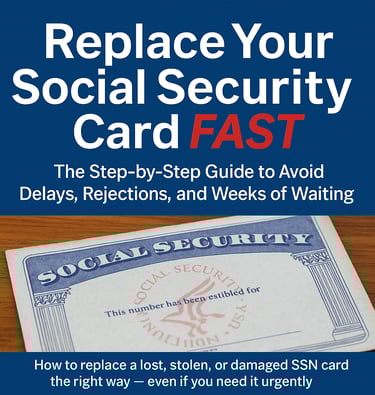
The “Replace Your Social Security Card FAST Guide” shows you:
The exact SSA screens to use
How to avoid rejections
How to update your name correctly
How to get proof while you wait
How to protect your job during the process
This is the same system thousands of Americans use when their income is on the line.
👉 Get instant access to the Replace Your Social Security Card FAST Guide now and secure your job, your paycheck, and your identity before delays cost you more than just time.
And remember: HR doesn’t verify your card.
They verify your number.
continue
number.
And that difference — between a piece of paper and a federal database record — is where most people either stay employed… or get quietly pushed out of payroll.
Now let’s go deeper into what happens after HR enters your Social Security Number into their systems, because this is where the real verification happens, and it explains why the physical card is almost irrelevant.
What Happens Inside HR Software After You Are Hired
The moment HR or payroll enters your SSN, your data is pushed through multiple automated compliance systems.
You never see them.
But they decide everything.
Here is the chain reaction that starts the second your SSN is typed:
Payroll system validation
IRS wage reporting structure
SSA earnings record matching
State new-hire reporting
E-Verify (for many employers)
Each of these uses your SSN differently, but none of them rely on the card.
They rely on exact data matches.
That is why someone can hand over a perfectly real Social Security card… and still get rejected.
The SSA Master File: The Real Gatekeeper
Every SSN in the United States lives in a massive database called the SSA Master File.
It contains:
Your full legal name
Your SSN
Your date of birth
Your citizenship or immigration status
Your death status (yes, really)
Your work eligibility flag
When HR enters your SSN, the payroll system sends your name and number to systems that cross-check this file.
If:
The name is spelled differently
The middle initial is missing
A married name is used instead of a maiden name
A hyphen or accent is different
The system can return a no-match.
Your card does not fix that.
Only updating the SSA record does.
Why Employers See “SSN Errors” Even When You Are Legit
Here are the most common real-world causes:
Married or Divorced Workers
You changed your name on your driver’s license, bank, and employer…
But never updated SSA.
Now your W-4 says “Sarah Martinez”
SSA still says “Sarah Thompson”
Mismatch.
Immigrants and New Citizens
You were issued an SSN when you had a work visa.
You later became a permanent resident or citizen.
SSA status was never updated.
Mismatch.
Data Entry Errors
HR types one digit wrong.
Payroll flags it.
Old SSA Records
Some people still have SSA files from decades ago that were never modernized.
Mismatch.
Again, none of this is solved by showing a card.
STOP wasting weeks in bureaucratic limbo! Get the exact blueprint to replace your SSN card NOW for just $9.99. Don't risk another rejection—Claim your instant access before this offer expires!
https://replacessncard.com/replace-your-social-security-card-fast-guide
What E-Verify Actually Checks
E-Verify does not look at your card.
It looks at databases.
Specifically:
SSA records
DHS immigration systems
It checks:
Your SSN
Your name
Your date of birth
Your citizenship or work authorization
If it finds a match, it returns Employment Authorized.
If not, it returns Tentative Nonconfirmation (TNC).
This does not mean you are illegal or fraudulent.
It means something didn’t line up.
And federal law gives you the right to correct it.
What To Do If HR Says Your SSN “Didn’t Go Through”
This is where people panic.
They think:
“I don’t have my card, so I’m screwed.”
You’re not.
You do this instead:
Step 1 — Ask for the mismatch reason
Is it:
Name?
Date of birth?
SSN digits?
Most of the time it is a name mismatch.
Step 2 — Check SSA records
Log in to SSA or visit an SSA office.
Ask:
“What name is associated with my SSN?”
You may be shocked.
Step 3 — Fix the record
Once SSA updates it, the system passes.
No new card required.
How Smart HR Departments Actually Handle This
Good HR teams do not ask for your card.
They:
Run I-9
Run E-Verify
Run payroll
If a mismatch appears, they give you a chance to fix it
That is the law.
Bad HR teams panic and demand documents.
That is how people lose jobs they never should have lost.
Remote Jobs and SSN Verification
Remote onboarding made this worse.
Now HR can’t even see your card.
They rely 100% on:
Digital I-9 verification
E-Verify
Payroll systems
Which means knowing this process is more important than ever.
Why Banks, Not Employers, Really Want the Card
Here is the twist:
Most people who think their employer needs the card are actually dealing with banks or benefits agencies.
Banks use the SSN to:
Verify identity
Prevent fraud
Report interest to the IRS
They often demand the card.
Employers do not legally need it.
The Emotional Reality Nobody Talks About
When you start a job, you are vulnerable.
You don’t want to look difficult.
You don’t want to argue.
You just want to get paid.
So when HR says “we need your Social Security card,” people say okay… even when it is wrong.
Then they lose days or weeks waiting for SSA mail while their payroll file is frozen.
That stress is real.
Missed rent.
Missed bills.
Fear of losing the job.
All avoidable.
The Only Time the Card Actually Matters
You truly need the physical card when:
Opening certain bank accounts
Applying for government benefits
Updating SSA records in person
Some licensing agencies
That is why replacing it fast still matters.
But it is not what verifies you for work.
Why Delays Happen at SSA
SSA rejects applications for:
Name mismatches
Address issues
Identity questions
Duplicate records
Status inconsistencies
One wrong click can delay your card by weeks.
Which is why people who rely on “I’ll just apply online” often get stuck.
The Smart Way to Handle All of This
Here is what financially smart workers do:
They know HR cannot legally require the card
They provide proper I-9 documents
They immediately start the SSA replacement process
They get temporary proof while waiting
They fix any SSA name or status mismatches
That way:
Payroll runs
E-Verify clears
The card arrives
Nothing breaks
This Is Exactly What the FAST Guide Is For
The Replace Your Social Security Card FAST Guide is not just “how to order a card.”
It is:
How to avoid SSA rejections
How to fix name mismatches
How to get proof for HR
How to keep your job while you wait
How to protect your identity
It was built for people in exactly this situation:
New job.
Missing card.
HR pressure.
Paychecks on the line.
👉 Get instant access to the Replace Your Social Security Card FAST Guide and take control of your employment, your payroll, and your financial identity — before delays cost you your income.
When you know how HR really verifies you, you stop being powerless.
And you stop letting a missing piece of paper decide your future.
continue
future.
And once you understand how the system actually works, something powerful happens:
you stop reacting to HR, and you start controlling the process.
Let’s go even deeper into the hidden mechanics that determine whether your Social Security Number is accepted or rejected — because this is where most payroll nightmares are born.
The IRS–SSA Data Loop That Controls Your Paychecks
Every time you are paid, your employer sends your SSN and wages to the IRS.
At the end of the year, they also send your W-2 to:
You
The IRS
The Social Security Administration
The SSA then updates your lifetime earnings record under that SSN.
That is how:
Your Social Security retirement is calculated
Your disability eligibility is tracked
Your Medicare eligibility is determined
So when payroll systems check your SSN, they are not just verifying employment — they are protecting that entire federal reporting chain.
That is why mismatches are taken seriously.
But again, the check is digital.
Your physical card never enters this loop.
Why Some Employers Still Ask for the Card Anyway
Here is the uncomfortable truth:
Some employers ask for the card because they want to see if you look “legit.”
It is not about compliance.
It is about fear.
They think:
“If they have the card, they must be real.”
But federal law does not allow them to play immigration officer.
Only the federal government decides work authorization.
Employers verify through the I-9 and E-Verify — not by judging your documents.
What “Document Abuse” Really Means
Document abuse is a serious violation.
It includes:
Asking for a specific document
Rejecting valid documents
Asking for extra documents
Asking for different documents because of your citizenship, accent, or background
The fines are real.
But most employees don’t know this — so employers get away with it.
What Happens If You Refuse to Show the Card
If you provide valid I-9 documents and they still refuse to hire or pay you, the employer is breaking the law.
You have the right to:
File a complaint with the Department of Justice Immigrant and Employee Rights Section
Continue working while the issue is resolved
Most companies back down when they realize you know the rules.
The Myth of “We Need It for Payroll”
Payroll needs:
Your SSN
Your name
Your address
That’s it.
They do not need to see the card.
They need to report the number — not validate the paper.
How Background Check Companies Use Your SSN
When your employer runs a background check, the SSN is used to:
Find prior addresses
Pull criminal records
Verify identity
Again, this uses databases — not the card.
Why Identity Theft Victims Are at Higher Risk
If your SSN has been used fraudulently:
SSA records may be corrupted
IRS records may be flagged
E-Verify may misfire
That is why replacing your card is not enough.
You must make sure your SSA record is clean and accurate.
The FAST Guide shows how to do that.
The Silent Payroll Freeze That Destroys New Hires
Here is a nightmare scenario that happens every week:
You start a job
HR enters your SSN
The system flags a mismatch
Payroll puts you in “suspense”
No direct deposit
No paycheck
HR says “bring your Social Security card”
You wait weeks.
But the problem was never the card.
It was the SSA database.
How To Get Paid Even While It’s Being Fixed
You are legally allowed to work and be paid while a Tentative Nonconfirmation is being resolved.
HR is not allowed to:
Suspend you
Delay pay
Terminate you
Because of a mismatch.
But many do — because workers don’t know their rights.
The Emotional Cost of Not Knowing This
People blame themselves.
They think:
“I lost my card, so this is my fault.”
No.
The system is designed to be confusing.
And confusion makes people compliant.
Why Speed Matters
The longer your SSA record is wrong:
The more payroll errors happen
The more tax issues appear
The more E-Verify problems occur
That is why a fast, correct replacement matters.
This Is Why the FAST Guide Exists
It is not about paper.
It is about:
Database accuracy
Employment security
Financial stability
The Replace Your Social Security Card FAST Guide gives you the exact steps to:
Fix SSA records
Get proof instantly
Replace the card without delays
Protect your job while you wait
👉 Get instant access to the Replace Your Social Security Card FAST Guide now — and never let a missing card or a broken database cost you another paycheck.
Your SSN is your financial identity.
Control it.
And nothing HR says will ever scare you again.
continue
again.
And once you reach that level of control, something subtle but powerful changes:
you stop being treated like a risk — and start being treated like a verified employee.
Now let’s expose one of the least talked-about parts of this entire system: the SSA “no-match” problem — and how it silently destroys onboarding for thousands of people every month.
The SSA “No-Match” That HR Never Explains
When an employer submits your SSN and name to payroll or E-Verify, it is checked against SSA records.
If the name and number do not match exactly, the system returns a “no-match.”
This is not a fraud alert.
This is not an immigration issue.
This is not a crime.
It is a database mismatch.
But here’s what happens in the real world:
HR sees:
“SSN does not match SSA records.”
And they panic.
So they ask for:
Your Social Security card
Your birth certificate
Your passport
Everything they can think of
None of which fixes the database.
Why SSA Records Are Often Wrong
SSA records are some of the oldest digital records in the federal government.
Many were created:
Before computers
Before online name changes
Before immigration databases
Before modern ID standards
Here is how they become wrong:
Marriage and Divorce
SSA often keeps your old name unless you update it.
Immigration Status Changes
Work visas, green cards, and citizenship upgrades don’t always sync automatically.
Data Entry Errors
One wrong letter or number — and the system never matches.
Multiple Records
Some people have duplicate SSA files merged incorrectly.
The Ugly Truth About Your Card
Your card may be wrong.
It might show:
An old name
A formatting that doesn’t match SSA
A number that is correct but tied to a broken record
So HR looks at the card and thinks:
“Okay, this looks real.”
But the system still says:
“No match.”
That’s why people with real cards still get blocked.
The Right Way to Fix a No-Match
You do not fix a no-match with HR.
You fix it at SSA.
Here’s how:
Ask SSA what name is on your SSN
Update it if needed
Get confirmation
HR reruns the check
Problem solved.
No card needed.
What If You Are a New Immigrant or New Citizen
This is where it gets even more dangerous.
If:
You recently became a permanent resident
Or a U.S. citizen
Or changed your status
Your SSA record might still say:
“Temporary work authorization.”
E-Verify flags you.
HR panics.
You get threatened with termination.
Again, the card does not fix this.
Only SSA and DHS record updates do.
Why Employers Still Get This Wrong
HR departments are not trained on SSA data architecture.
They are trained on:
Forms
Checklists
Software screens
When something fails, they default to documents.
But documents do not control the databases.
How This Destroys Remote Hiring
With remote jobs:
There is no in-person document review
Everything is electronic
Errors surface immediately
Which is why remote hires are more likely to be delayed or rejected for SSN mismatches.
The Financial Fallout Is Real
When payroll is frozen:
You still work
But you are not paid
Your rent doesn’t wait
Your bills don’t wait
All because of a digital mismatch.
Why the FAST Guide Is Different
Most guides say:
“Apply for a replacement card online.”
That’s not enough.
The Replace Your Social Security Card FAST Guide shows you:
How to check your SSA record
How to fix name and status mismatches
How to get proof for HR
How to avoid weeks of delay
It is a system, not a form.
If You Are Starting a Job Right Now
This matters more than anything.
Do not wait for a payroll freeze.
Do not wait for HR to say something is wrong.
Get your SSA record clean and your replacement in progress now.
👉 Get instant access to the Replace Your Social Security Card FAST Guide and make sure your next paycheck is protected before anything goes wrong.
Because once payroll locks you out, you’re not just missing paper.
You’re missing money.
continue
money.
And when your income is on the line, there is nothing theoretical about any of this anymore.
So let’s walk through exactly how HR departments verify Social Security Numbers step-by-step in the real world — so you can see, with total clarity, why the card is almost never the deciding factor.
Step-by-Step: How HR Actually Verifies Your SSN
When you are hired, HR enters your data into their Human Resources Information System (HRIS). This might be Workday, ADP, Paychex, Gusto, Rippling, or one of dozens of similar platforms.
They type:
Full legal name
Date of birth
Social Security Number
Address
Citizenship or work status
The software then runs several automated checks.
1. Format Check
Is the SSN nine digits?
Is it in a valid range?
Does it look like a real number?
If not, it fails immediately.
2. SSA Match
The name and SSN are sent to SSA systems.
Does this combination exist?
If not, it returns a mismatch.
3. IRS Reporting Check
The payroll system prepares to report wages under that SSN.
If it doesn’t exist or doesn’t match, IRS reporting will fail later — so payroll flags it early.
4. E-Verify (If Used)
The system sends the data to DHS and SSA.
They verify:
Work authorization
Identity
Status
At no point is a card scanned, read, or transmitted.
Why Your SSN Can Be “Valid” But Still Fail
Here is a scenario that happens constantly:
Your SSN is real.
Your card is real.
But your name does not match SSA records.
So the system fails you.
HR looks at your card and says:
“But this looks fine.”
The computer says:
“No match.”
The computer wins.
The One Thing HR Cannot Override
HR cannot override SSA or DHS databases.
They cannot force payroll through.
They cannot force E-Verify to pass.
They cannot “accept” your card instead.
Only the federal databases control this.
Why Some Employers Ask for the Card Anyway
They are hoping:
“If we have a copy, we’re protected.”
They are wrong.
Only the databases matter.
What To Do If Payroll Is Blocked
If HR tells you:
“We can’t pay you until we get your Social Security card,”
What they really mean is:
“There is a mismatch we don’t understand.”
Your move:
Ask:
“What does the system say is wrong — name, number, or status?”
That single question changes everything.
How You Get Temporary Proof While Waiting
SSA can give you:
A verification letter
A receipt
A record printout
These are accepted by payroll departments because they come directly from SSA.
They show:
Your name
Your SSN
Your status
That is real verification.
Why People Lose Weeks Waiting for the Card
SSA mail is slow.
Errors are common.
Rejections happen.
Meanwhile, payroll is frozen.
That’s why you don’t wait.
The FAST Guide Is Built for This Moment
The Replace Your Social Security Card FAST Guide was created for people who:
Just started a job
Lost their card
Are facing payroll issues
Need proof now
It shows you:
How to get SSA verification
How to fix mismatches
How to get your replacement without delays
👉 Get instant access to the Replace Your Social Security Card FAST Guide and make sure your job, your paycheck, and your identity are protected — starting today.
Because in the U.S. system, your SSN is not paper.
It is power.
continue
power.
And when you understand that, you stop chasing paper and start controlling the data that actually decides whether you get paid.
Now let’s expose one of the most misunderstood parts of this entire process: what happens when HR outsources verification to third-party companies — and why that often makes things worse, not better.
How Third-Party Verification Companies Check Your SSN
Most large employers do not verify SSNs themselves.
They use:
Background check companies
Payroll processors
Compliance vendors
Identity verification services
These companies do not look at your Social Security card.
They connect to:
SSA databases
IRS records
Credit bureaus
DHS systems
They are algorithm-driven.
They do not care what you hold in your hand.
They care what the database says.
Why You Can Fail Even When Everything Is Real
These systems are brutal.
If:
One letter in your name is different
One digit is transposed
Your SSA record is outdated
Your immigration status isn’t synced
The system returns:
“Unable to verify identity.”
And HR sees:
“Problem with SSN.”
They think:
“Ask for the card.”
Which does nothing.
The Credit Bureau Cross-Check
Many payroll and background systems also ping:
Experian
Equifax
TransUnion
They use your SSN to find:
Address history
Identity consistency
If your SSA record and credit records don’t align, you get flagged.
Again, paper is irrelevant.
Why People With Thin Credit Files Get Hit Harder
Young workers, immigrants, and people who avoid credit often have:
Little or no credit history
Fewer database touchpoints
So when systems cross-check, they find less data — which increases mismatches.
HR thinks something is wrong.
But nothing is wrong.
The data is just thin.
Why New Hires Are Treated Like Risks
From a compliance standpoint, a brand-new employee with:
No payroll history
No W-2s
No prior reporting
Looks riskier than a long-time worker.
So systems scrutinize new hires more.
That’s why SSN issues hit you hardest at the exact moment you need money most.
What Actually Clears These Flags
Not documents.
Not your card.
What clears them is:
SSA record corrections
Name updates
Status updates
Verified SSA letters
Once the database is correct, everything else clears.
The Hidden Danger of Using the Wrong Name
If HR enters:
“Maria Gonzalez”
But SSA has:
“Maria L. Gonzalez-Ramirez”
You fail.
Your card might say one thing.
SSA might say another.
The system follows SSA.
How To Find Out What SSA Really Has
You can:
Log in to SSA online
Call SSA
Visit a local office
Ask:
“What is the exact name and status associated with my SSN?”
That is the truth.
Why People Are Shocked by the Answer
They discover:
Old names
Misspellings
Wrong statuses
Incomplete records
They had no idea.
Until payroll stopped.
The FAST Guide Saves You From This
The Replace Your Social Security Card FAST Guide shows you:
How to check your SSA record
How to fix errors
How to get proof for HR
How to avoid weeks of delays
It is not about a card.
It is about controlling the databases that decide your financial life.
👉 Get instant access to the Replace Your Social Security Card FAST Guide now — and make sure no employer, no algorithm, and no outdated record can block your paycheck ever again.
Your SSN is your financial fingerprint.
Make sure it’s clean.
continue
clean.
And once your Social Security record is clean, something incredible happens:
everything else in your financial life suddenly starts working the way it’s supposed to.
Now let’s look at one of the most dangerous misconceptions in the American employment system — the idea that HR “needs” your Social Security card to stay compliant.
This belief is not just wrong.
It actively harms workers.
The Compliance Myth That Hurts Millions
Employers are terrified of fines.
So they tell themselves:
“If we collect the Social Security card, we’re safe.”
They think the card is proof.
But legally and technically, it isn’t.
The law requires:
An I-9
A work authorization check
Accurate wage reporting
None of that requires a card.
Why Over-Documenting Is Illegal
Federal law explicitly forbids employers from demanding more or different documents than required.
This is called document abuse.
It applies when:
You are asked for a specific document
Even though you have valid alternatives
So when HR says:
“We need your Social Security card.”
But you already provided:
A passport
Or a driver’s license + birth certificate
They are violating federal law.
Most employees don’t know this.
So the abuse continues.
How This Plays Out in Real Life
You start a job.
You give HR:
A passport
That’s enough.
HR says:
“We still need your Social Security card.”
You don’t want to cause trouble.
So you say:
“Okay, I’ll bring it.”
Then you realize:
You lost it.
Now:
Payroll is frozen
HR won’t proceed
Your first paycheck is delayed
All for something they were never allowed to require.
Why They Get Away With It
Because nobody pushes back.
Because people are scared to lose their job.
Because they don’t know the law.
The System Is Built on Your Silence
HR departments assume:
“If the employee doesn’t complain, we’re fine.”
So they keep demanding cards.
What Happens When Someone Pushes Back
They stop.
Because they know they are wrong.
One employee who knows the rules can change an entire HR department’s behavior.
What If They Still Refuse
You have the right to:
File a complaint
Keep working
Get paid
But most people don’t want a legal battle.
So they wait.
And they lose money.
Why Replacing Your Card Fast Still Matters
Even though HR doesn’t need it, others do:
Banks
Government agencies
Credit bureaus
That’s why you should never be without it.
But you should never let a missing card cost you a job.
The FAST Guide Gives You Leverage
The Replace Your Social Security Card FAST Guide gives you:
The fastest legal way to get a new card
Temporary proof to show HR
Steps to fix SSA mismatches
Scripts to protect your job
So you are never powerless.
👉 Get instant access to the Replace Your Social Security Card FAST Guide now — and take control of your employment, your income, and your identity before anyone else decides for you.
Because in America, knowledge isn’t just power.
It’s pay.
https://replacessncard.com/replace-your-social-security-card-fast-guide
Help
Questions? Reach out anytime.
infoebookusa@aol.com
© 2026. All rights reserved.